
The tires on your electric scooter are easy to forget about. But they affect pretty much every aspect of how a scooter performs and handles. In this guide, we break down the main types of electric scooter tires, so you know what's right for your riding. We'll also talk about how you can get the most out of them and how to look after them properly.

Quick Answer: Which Electric Scooter Tire Is Best?
- Pneumatic tires usually give you the most comfort and grip, but they need a bit more looking after. Tire type should be evaluated with range, brakes, suspension, and portability in the electric scooter buying guide.
- Solid tires cut flat risk right down, but they can feel harsh on rough roads and provide less grip in some circumstances.
- Wider tires add stability and comfort, but also add some extra weight.
Really, it comes down to your road surface, how much maintenance you're prepared to do, and what the scooter's for.
Why Tires Matter More Than Buyers Think
It's understandable for new electric scooter riders to get caught up comparing motor power and battery size, but tires affect the ride just as much. For rain-specific precautions, see how tires and brakes affect riding when an electric scooter gets wet. A powerful motor on harsh, narrow tires still feels uncomfortable on a daily commute; all that power doesn't count for much if every crack in the road rattles up through your feet.
The most obvious characteristic of electric scooter tires is how much grip they give you in varying conditions. But you also need to know about rolling resistance. Underinflated or poorly designed tires have higher rolling resistance, which makes the motor work harder and eats into your range.
Then there's maintenance: solid tires need almost none, pneumatic tires need the odd pressure check, which can sway some buyers one way or the other.
Stability at speed is worth mentioning as well. Wider tires generally feel more planted, particularly once you're up around 25 to 30 mph.
Solid Tires: No Punctures, But a Harder Ride
Solid tires are exactly what they sound like; they have no air or inner tube in them, so there's no risk of a puncture. This is very appealing to some scooter riders, as there's no chance of being stuck with a flat on the way to work, and you'll never need to think about pressure again.
The downside of solid tires is a lack of comfort. Without air to absorb impacts, you get more bumps and vibrations coming through the deck and into your legs. You'll notice that cracked pavement and potholes feel harsher than they would on an air-filled tire. Grip suffers a little, too, particularly when it's wet, since there's less give in solid rubber to help it conform to the surface. For riders on flat, predictable routes, none of that matters much. For anyone riding rougher streets daily, it really makes a difference.
Pneumatic Tires: More Comfort, A Bit More Upkeep
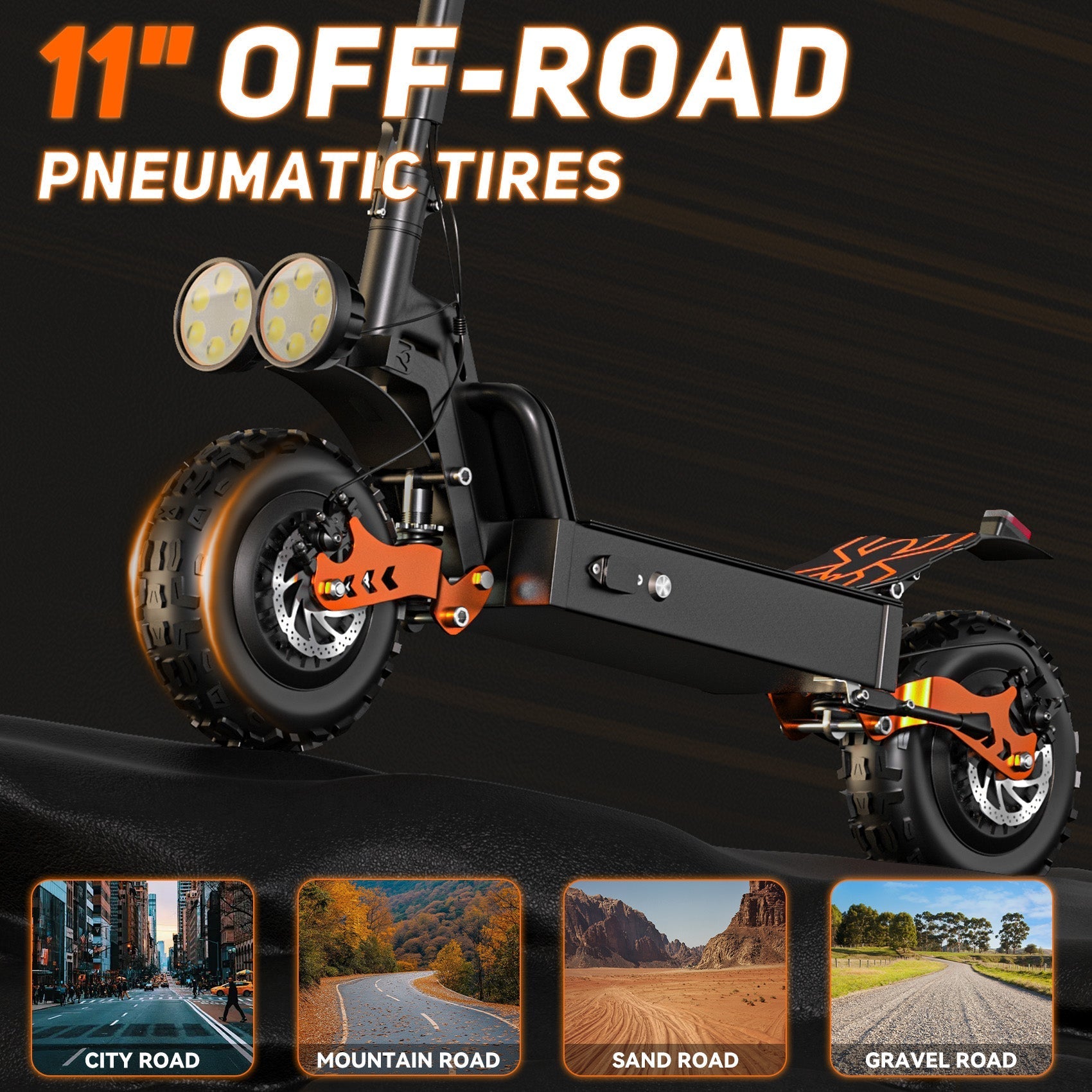
Pneumatic tires are filled with air and are usually fitted to scooters built for comfort or performance. The air within the tires absorbs bumps and cracks in the road in a way solid rubber can't. On top of this, the tire flexes slightly on the road, which improves grip, especially in wet weather.
Of course, air-filled tires can go flat. Some use an inner tube, like a bike, which is straightforward to patch or replace if it fails. Others are tubeless, which lowers the chance of a sudden flat but can be trickier to fix properly if something bigger goes wrong. Either way, you're looking at occasional pressure checks and the odd bit of attention the solid tire owner never has to think about. Low pressure increases rolling resistance and reduces mileage, as explained in the guide to real-world electric scooter range. Most riders decide that trade is worth making the moment they feel the difference in ride quality.
What "Fat Tire" Actually Means
You will come across electric scooters with fat tires. As the name suggests, they are wider than standard, often measuring 4 inches or more, though the term is used loosely these days. There are quite a lot of scooters with wider-than-average tires that aren't marketed as true fat tire models. The extra width increases the contact patch with the road, adding stability and confidence, particularly at higher speeds or on rougher surfaces.
One thing you need to be aware of when it comes to fat tires on electric scooters is that, on its own, a fat tire doesn't make a scooter off-road capable. Things like tread pattern, suspension, wheel diameter, frame strength, and motor power all need to be taken into account.
A fat tire scooter with street tread won't handle a muddy trail better than a scooter with narrower tires and the same tread. The main job of fat tires is to provide comfort and confidence on rough city streets, not for taking you off-roading. There is a slight increase in weight with fat tires, which you'll notice if you're carrying the scooter upstairs or loading it into a car most days.
Size, Diameter, and How the Ride Actually Feels
Even though tire width is important, you should also pay attention to wheel diameter. When your scooter has larger wheels, it will roll over cracks and small obstacles more easily, since more of the wheel stays in contact with the ground as it crosses a gap.
Smaller wheels don't roll over potholes quite as well as larger ones. This is a big part of why compact scooters with tiny wheels can feel jumpy on anything but perfect pavement.
Your scooter's tire and suspension combination can significantly affect how it performs. Good suspension on poor tires still feels harsh. Great tires with no suspension still transmit the bigger hits. The most comfortable scooters tend to pair larger pneumatic tires with some form of suspension.
Getting Pressure and Maintenance Right
Looking after your electric scooter's tires isn't complicated, but it is essential. Scooter manufacturers give you a recommended tire pressure, usually in PSI. This is the pressure you should aim to keep your tires inflated to. You may find this figure printed on the tire's sidewall or in the owner's manual.
If you run at too low a pressure, rolling resistance goes up, which reduces your range and makes the scooter feel sluggish. It also raises the risk of a pinch flat, where the tube gets caught between the rim and a hard impact.
On the other hand, overinflated tires ride harsher and are more prone to a blowout if you hit something hard.
It's worth giving your tires a proper look every so often. Check the tread for wear, look at the sidewalls for cracks or bulges, and make sure the valves are seated properly. Small stones, thorns and glass can work their way into the tread over time, too, so it's worth checking for embedded debris before it turns into a slow leak. Tire pressure and tread condition should also be part of the pre-ride checks in how to ride an electric scooter safely.
Which Tire Type Should You Choose?
For most commuters riding on decent roads, pneumatic tires are the better call. The comfort adds up over a daily ride, and the maintenance required is fairly minor.
If comfort is your main priority when riding your scooter, like a seated commuter you'll be on for a while each day, pneumatic tires make the most sense. Long-range riders benefit for a different reason: correct pressure keeps rolling resistance down, which keeps your range up. Heavier riders should consider pneumatic or fat tires, too, since the extra cushioning and stability help with more weight, and riders who want performance generally go for wider, higher-quality pneumatic tires for the grip they provide.
If low maintenance tops your priority list, solid tires are worth a look, particularly for short, predictable commutes where comfort isn't the main concern.
PostJoy Electric Scooter Tire Examples
Both PostJoy scooters use pneumatic tires, but are quite different in terms of what they are used for.
The PostJoy K10 has 14x2.2-inch pneumatic tires. That's a good size for a seated commuter scooter, offering a comfortable ride on city roads without adding extra weight. Paired with the dual suspension, everything about it points towards daily comfort rather than outright performance.
The PostJoy GT28 has 11x2.5-inch off-road pneumatic tires instead. They're wider and more aggressive, built to handle mixed terrain and offer more grip on loose or wet surfaces. Combined with the front and rear suspension, the GT28 is clearly aimed at riders who want more capability across varied conditions, not just an easy daily commute.
The K10 vs GT28 comparison explains how those tire differences combine with seat comfort, speed, range, and terrain. Browse the full PostJoy electric scooter range to compare tire specs across both models.
FAQ
Are solid or pneumatic scooter tires better? It depends on what you value most. Pneumatic tires are more comfortable and grip better, but they need occasional maintenance. Solid tires need almost none, but ride harsher. Most riders on regular roads decide the extra care is worth it.
Do electric scooter tires affect range? They do. Underinflated pneumatic tires increase rolling resistance, which makes the motor work harder and eats into your range. Keeping pressure at the manufacturer's recommended PSI helps.
What tire pressure should an electric scooter have? Check the manufacturer's figure for your specific model rather than a general online number, since it varies. Usually it's printed on the sidewall or in the manual.
Are fat tire electric scooters better? Better for comfort and stability, especially on rougher roads, yes. But a wide tire alone doesn't make a scooter off-road ready. Tread, suspension, and wheel diameter all play a part, too.
Can electric scooter tires go flat? Pneumatic ones can, whether tubed or tubeless. Solid tires can't, since there's no air in them to lose in the first place.
Are tubeless scooter tires worth it? For many riders, yes. They lower the chance of a sudden flat from a small puncture, since the sealant often seals minor holes on its own. Bigger punctures can be trickier to repair, though.
Share:
How to Ride an Electric Scooter Safely: A Beginner's Guide
Electric Scooter Brakes Guide: Disc, Drum, and Electronic Brakes Explained