
An electric scooter is easy to ride; it doesn't take long to pick up the basics. But there are a few things a new electric scooter rider should know in the early days to make a big difference to how safe and confident you feel. This guide covers everything a first-time rider needs to know.
Quick Answer: Safe Electric Scooter Riding Basics
When you break down the few electric scooter safety measures, it's pretty simple and soon becomes something you do automatically. For injury patterns and the factors that increase risk, see the evidence-based overview of electric scooter safety.
• Wear a helmet
• Check the scooter before every ride
• Start in a low-speed mode
• Use both hands on the handlebars
• Look ahead, not down at the deck
• Brake early
• Follow local road rules
Before You Ride: Safety Gear and Scooter Check
A helmet is the most important piece of gear, and you should wear one every time you ride. Head injuries account for a large proportion of serious e-scooter injuries, and most are preventable. It might be tempting to just buy a cheap helmet, but you get what you pay for. A decent helmet gives you more protection, but it also has to fit properly. If a helmet is too loose or too tight, you won't get the comfort or protection you need.
Closed-toe shoes are also important. Flip flops and sandals don't protect your feet if something goes wrong. However, you might not want to wear shoes with thick soles, as they can insulate you from important feedback you get through the scooter's deck.
If you're riding in low light or at night, make sure the front and rear lights are working. Flashing lights are great for alerting other road users to your presence. It's also important to wear something reflective or in bright colors. Dark clothing can make you almost invisible to drivers in certain circumstances.
Before you set off, we recommend checking a few things. The first thing to do is to check the tires. If they're pneumatic, check that they are at the correct pressure. It's best to also inspect the tire tread every few weeks to ensure you have sufficient grip on the road. For pressure, tread, puncture, and tire-type guidance, use the electric scooter tire guide.
Test the brakes before you ride, not after you've set off, to see if they are working correctly. You really don't want to find out your brakes don't work when you need them the most.
Before you get on the scooter, check that the folding latch and stem are locked. And make sure the battery is charged enough for your route.
Beginner Stance and Balance
When you ride your electric scooter, stand with one foot slightly in front of the other. Also, keep your knees relaxed, not locked, as soft knees help you absorb bumps in the road that might upset your balance.
It's best to keep your head up and your eyes on the road ahead. It can be tempting to look at the deck or at the road just in front of the wheel, but it's best to look into the distance so you can avoid any upcoming hazards.
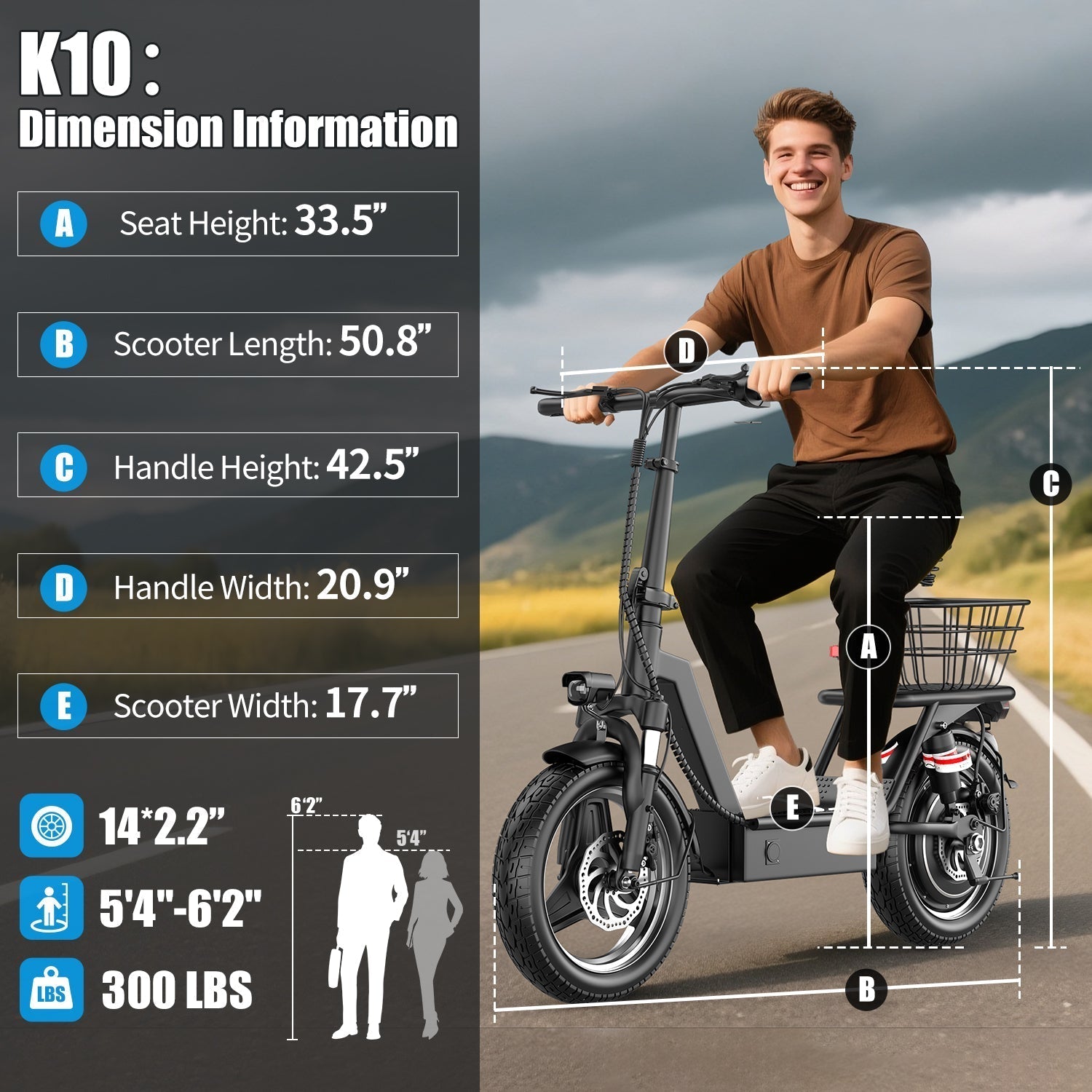
Keep your weight centered over the deck, and don't lean too far forward or back, as it is better for keeping control of your scooter. On the PostJoy K10 with a seat, the seated position lowers your center of gravity, making it more stable, which is helpful for new riders.

Starting, Accelerating, and Controlling Speed
Always set off slowly and carefully. You can do this by being gentle with the throttle rather than using sudden inputs. As you become more experienced, you will know your limits and develop a more confident riding style, and know when you can accelerate faster safely.
Keep your speed matched to the surface and conditions. A speed that feels fine on flat tarmac is too fast on gravel or wet roads. Speed is optional. Control is not.
Braking Safely
Brake earlier than you think you need to. Stopping distances on a scooter are longer than most new riders expect. This is especially true when riding in wet weather, on a loose surface, or as your tires age.
A great tip is to shift your weight slightly back when braking, as it shortens your braking distance. It's best not to grab the brakes hard; instead, apply them progressively to give you more control under braking and to avoid locking your wheels. The electric scooter brakes guide explains brake types, stopping performance, maintenance, and warning signs.
Practice emergency stops before you need to use one. To do this, find a quiet car park and practice braking hard from your normal riding speed. Do it a few times to get a feel for what the scooter does.
Turning, Corners, and Obstacles
Always slow down before you turn your scooter. Don't try to steer sharply at speed, as it can cause you to understeer or skid.
When you're riding, it's important to look out for potholes, cracks, wet leaves, gravel, and metal drain covers. All of these are more dangerous than they look. Wet leaves and painted road markings are particularly slippery. Slow down before you cross them, not while you're on them.
Although you might find it fun, don't try to jump curbs, as it can be dangerous. Also, regular hard drops put stress on the frame, which can damage it.
Riding in Traffic, Bike Lanes, and Shared Paths
As an electric scooter rider, you should always follow the rules of the road. It's not just a legal requirement, but it helps other road users to predict what you're about to do, keeping you safe. When you weave around the road erratically, a driver may not be able to avoid crashing into you.
Things like signaling your intentions where you can and making eye contact with drivers at junctions are good practices. Don't assume they've seen you.
On top of this, avoid riding in drivers' blind spots, as they might change direction suddenly without realizing you're there. Large vehicles need plenty of space, often more than you first realize, so make sure you don't get too close or end up in their way.
You should also yield to pedestrians on shared paths as they have the right of way.
Sidewalks, Roads, and Legal Limits
Sidewalk riding is restricted or illegal in most US states, so it's worth checking your local rules before you ride. Check the overview of electric scooter laws in the US, Canada, and Europe before choosing where and how fast to ride. Riding on the pavement puts pedestrians at risk and can result in a fine in some areas. This article covers the general principles, but local rules vary quite a bit, so always double-check what applies where you live.
Weather and Night Riding
Wet roads significantly reduce grip, and your braking distances will increase as a result. It's best to slow right down in the rain and avoid puddles where you can, since you never really know how deep they are until you're in one. Learn what IP ratings do and do not protect in our guide to electric scooter waterproofing. Also, check the PostJoy guidance on wet-weather riding for your specific model before you head out in heavy rain.
At night, always use your front and rear lights, and wear reflective clothing if you have it. Give yourself more time to react to hazards, as your own visibility and everyone else's is reduced.
Beginner Practice Plan
Before you ride on roads, it's worth spending 20 minutes in a quiet car park or empty space getting used to the scooter. Here's a simple plan to follow.
First 5 minutes: walk around the scooter and get familiar with the controls. Find the brake, the throttle, the lights, and the power button, and practice turning it on and off a few times.
Next 5 minutes: practice starting and stopping. Go slowly at first, and get a feel for how the throttle responds and how much braking distance you need.
Next 5 minutes: practice turning. Do some wide turns first, then move on to tighter ones, and try a few figure eights once you're comfortable steering at low speed.
Last 5 minutes: practice emergency braking. Ride at your normal speed, brake as hard as you can safely manage, and repeat a few times so you know exactly what the scooter does when you stop hard.
Once you've been through all four, go for a short ride on a quiet road before you tackle anything busier.
PostJoy Electric Scooters
Both PostJoy scooters in the electric scooter range are well-suited to beginner riders, though in different ways.
The PostJoy K10 has a top speed of 25 mph and an adjustable padded seat. The lower top speed and the seated option make it a more approachable choice if you've never ridden a scooter before. The 14x2.2-inch pneumatic tires and dual suspension give a stable, comfortable feel on city roads, which is exactly what a nervous first-time rider needs.
The PostJoy GT28 has a top speed of 35 mph and a 3000W dual-motor system, making it a more capable machine, but it also requires more experience to ride safely at full speed. If you're a complete beginner, it's worth starting with the K10 or riding the GT28 in a lower speed setting until you build up your confidence.
FAQ
Is it hard to ride an electric scooter? Not really. Most people pick it up within the first few minutes. The controls are simple enough, but riding confidently in traffic takes a bit of practice, so start in a quiet place before you head out on the road.
How do beginners ride an electric scooter safely? Start slowly, wear a helmet, and check the scooter before every ride. It's a good idea to practice in a quiet car park first, then build up to busier roads once you feel comfortable.
Should I wear a helmet on an electric scooter? Yes, every single ride. Head injuries are the most serious type of e-scooter injury, and a properly fitted helmet reduces that risk considerably.
How do you brake on an electric scooter? Apply the brakes progressively instead of grabbing them, and shift your weight slightly back as you do. Brake earlier than you think you need to, especially in the wet.
Can you ride an electric scooter in the rain? You can, but you'll need to take more care. Grip is reduced on wet roads, so your braking distances will increase. Slow down, avoid puddles, and check PostJoy's guidance for your specific model.
Is sidewalk riding safer than road riding? Not from a legal standpoint. Sidewalk riding is restricted or illegal in most US states, and it puts pedestrians at risk as well. Stick to bike paths and roads where you're permitted to ride.
Share:
How Long Does It Take to Charge an Electric Scooter?
Electric Scooter Tire Guide: Solid vs Pneumatic vs Fat Tires