
The range advertised for an electric scooter is rarely the distance you can confidently expect each day. The electric scooter range is less of a definitive distance and more of a budget.
The optimum range is how far you could go, but factors like rider weight, terrain, weather, and riding style can all use up your battery power.
That’s not very helpful if you’re looking for a new electric scooter. This guide looks at real-world electric scooter range, the factors that make a difference, and how to understand the difference between claimed vs tested range.
How Far Can an Electric Scooter Go?
Electric scooters can cover anything from short local trips to extended journeys, depending on the model and riding conditions.
While most people don’t imagine covering a 30-mile journey on an electric scooter, with some models it’s technically possible — and that can include the return journey.
Range is generally only a concern for a longer journey. If range is one of several features you are comparing, start with the broader electric scooter buying guide. If you’re hopping around a small urban center, you’re probably covering less distance than you imagine. The real risk is for commuters who must consider not just A to B, but also B to A. If you can’t get home on the same charge, it can create a lot of issues.
At higher distances, you can find batteries that offer enough range. But if your scooter is uncomfortable or has poor tires, covering that distance becomes the bigger issue.
Advertised Range Is the Best-Case Version
Range is not all the same. You might think that if an e-scooter says it can cover 40 miles, you can plan a 20-mile round trip. That’s not the case.
We can broadly think of range in three categories:
- Advertised range: Usually recorded under controlled or favorable conditions.
- Tested range: The result achieved during an independent test.
- Real-world range: What an individual rider experiences on their normal route.
Usually, the advertised (and even the tested) range is under ideal conditions. The scooter was ridden on flat roads, with lighter riders, at moderate speeds. If you plan to go faster, carry more weight, or tackle a particularly difficult incline, you’ll find your range goes down considerably.
That doesn’t mean the advertised range is useless. Compare the advertised range with your full round trip and allow at least 50% extra, with a larger margin for hills, cold weather or heavier loads.
Think in Terms of Usable Range
Usable range is how far a rider can depend on the scooter without the battery going completely flat. The usable range leaves a little extra power in the battery. Why? Well, no journey — even the ones you do every day — is 100% predictable. A diversion, unexpected hill, cold morning, or constantly riding into the wind should not leave you pushing the scooter home.
Here’s a helpful formula:
Total daily distance × 1.5 for ordinary routes
Total daily distance × 2 for hills, cold weather, or heavier loads
This isn’t a guarantee of range, either. It’s just a more practical, realistic way to think about how far battery life will last under real-world conditions.
Where Your Range Actually Goes
You might be wondering how a 40-mile range can quickly whittle down to just 25 miles or so. Maybe even less. Where does all that power actually go? There are a lot of factors that can drain the battery. Consider that every bit of extra weight, rougher ground, or steeper incline compared to the initial test will lower the battery life.
|
Range factor |
Why it uses more battery |
Likely impact |
|
Rider and luggage weight |
The motor works harder to move the load |
Moderate to high |
|
High-speed riding |
Air resistance and power demand increase rapidly |
High |
|
Hard acceleration |
Repeated bursts draw more energy |
Moderate |
|
Hills |
The motor must work continuously against gravity |
High |
|
Stop-start traffic |
Frequent acceleration consumes extra power |
Moderate |
|
Low tire pressure |
Greater rolling resistance slows the scooter |
Moderate |
|
Rough surfaces |
More energy is lost through vibration and resistance |
Variable |
|
Headwinds |
The motor works harder to maintain speed |
Moderate to high |
|
Cold weather |
Lithium batteries temporarily deliver less energy |
Moderate |
|
Battery age |
Usable capacity gradually declines |
Increasing over time |
A single journey isn’t going to have a single factor drain the battery. Rather, it’s a combination of multiple factors that each place additional pressure on the motor, which in turn requires more power to keep going.
Wh Tells You More Than Ah
Look through an electric scooter’s spec sheet, and you’ll see battery life listed with two numbers. The PostJoy GT28 Electric Scooter, for example, has a 48V 20Ah battery.
What do these two numbers mean?
Voltage (V) is the battery system’s operating level. Amp-hours (Ah) is how much electrical charge the battery stores. You can’t understand either number in isolation, making it difficult to compare e-scooters, which can have different V or Ah.
It’s only when we multiply them together to get watt-hours (Wh) that we can begin to compare models.
Voltage × amp-hours = watt-hours
The electric scooter battery guide explains voltage, Ah, Wh, charging cycles, and battery care in greater depth.
So, the GT28 has a battery containing 960Wh. The larger Wh figure usually indicates more stored energy. That doesn’t guarantee range. A heavier scooter might still have less range than another model even if it has a bigger Wh. However, it’s a useful figure to understand.
Build Your Range Around the Route
You can adjust your route, but you can’t fundamentally change it. (Daily riders can apply that calculation with the checklist in our guide to the best electric scooter for commuting.) That’s why you should always choose the desired range around your everyday usage. You might wonder why not opt for the most range possible. The main issue is weight. Extra range means more batteries, which are the heaviest part of an electric scooter.
You’ll want to try to balance these factors. Pick something that can handle everything you do in 1-2 days. You can then recharge in the evenings.
There’s a tendency to underestimate range. We forget about the little journeys that we make, or the detours that occur. If in doubt, take note of where you go over the average week. It’ll help you get a more accurate understanding.
|
Typical use |
How to plan the range |
What else matters |
|
Local errands |
Cover the journey with a comfortable reserve |
Weight and easy storage |
|
Short commute |
Round trip plus at least 50% margin |
Reliability and charging time |
|
Full work commute |
Allow for detours, weather and battery aging |
Comfort, brakes and lights |
|
Hilly or heavy-load route |
Consider up to twice the daily distance |
Sustained power and battery size |
|
Long suburban ride |
Prioritize dependable tested range |
Tires, suspension and comfort |
|
Performance riding |
Expect speed to reduce range considerably |
Braking, stability and battery heat |
Small Riding Habits Can Add Useful Miles
Range isn’t completely out of your control. There are small riding habits you can introduce that mean you can get more out of your battery. Better charging habits also protect long-term capacity; see electric scooter charging times and best practices. Just like driving your car at maximum speed on flat tires loaded up with goods will require more fuel, the same logic applies to the scooter.
- Use a moderate riding mode. If you can change the riding mode, opt for something in the middle. Try not to accelerate harder; instead, gradually reach a sensible cruising speed.
- Keep your tires inflated. The flatter the tire, the more rolling resistance. Your tires don’t need to be really firm. But they should be at their optimum pressure, giving you enough grip for the road without draining your battery.
- Only carry what you need. If you’re commuting or picking up supplies, you might not need everything you’ve brought along. For shopping, you can push the heavier items to the end of your trip, so you carry them for less time.
- Avoid storing the battery completely empty. This will begin to damage the battery over time. You’ll want to store the scooter somewhere dry and reasonably temperate with between 20-80% of the charge.
When More Range Is Worth the Extra Weight
More range comes with more weight. It’s not just the batteries. Electric scooters often come with better brakes, a stronger frame, and bigger everything. It’s designed for longer distance journeys.
Choosing a large range if you’re only using the scooter to get to a train for your commute or making short journeys might not be worth it. After all, you don’t want to lug a heavy scooter onto public transport day after day.
Paying for a larger battery makes sense for:
- Long commutes
- Infrequent access to charging
- Regular hills
- Heavier riders or luggage
- Mixed road conditions
- Longer recreational rides
- Riders who want greater battery headroom as the scooter ages
And it’s not just the weight. Batteries can add considerably to the overall price. Make sure it’s something worth investing in.
K10 or GT28: Match the Scooter to the Journey
The right choice depends on the journey. The K10 is built for everyday convenience, while the GT28 sacrifices portability for more battery capacity and power. Use the full K10 vs GT28 comparison for the complete differences.
K10 for Everyday Journeys
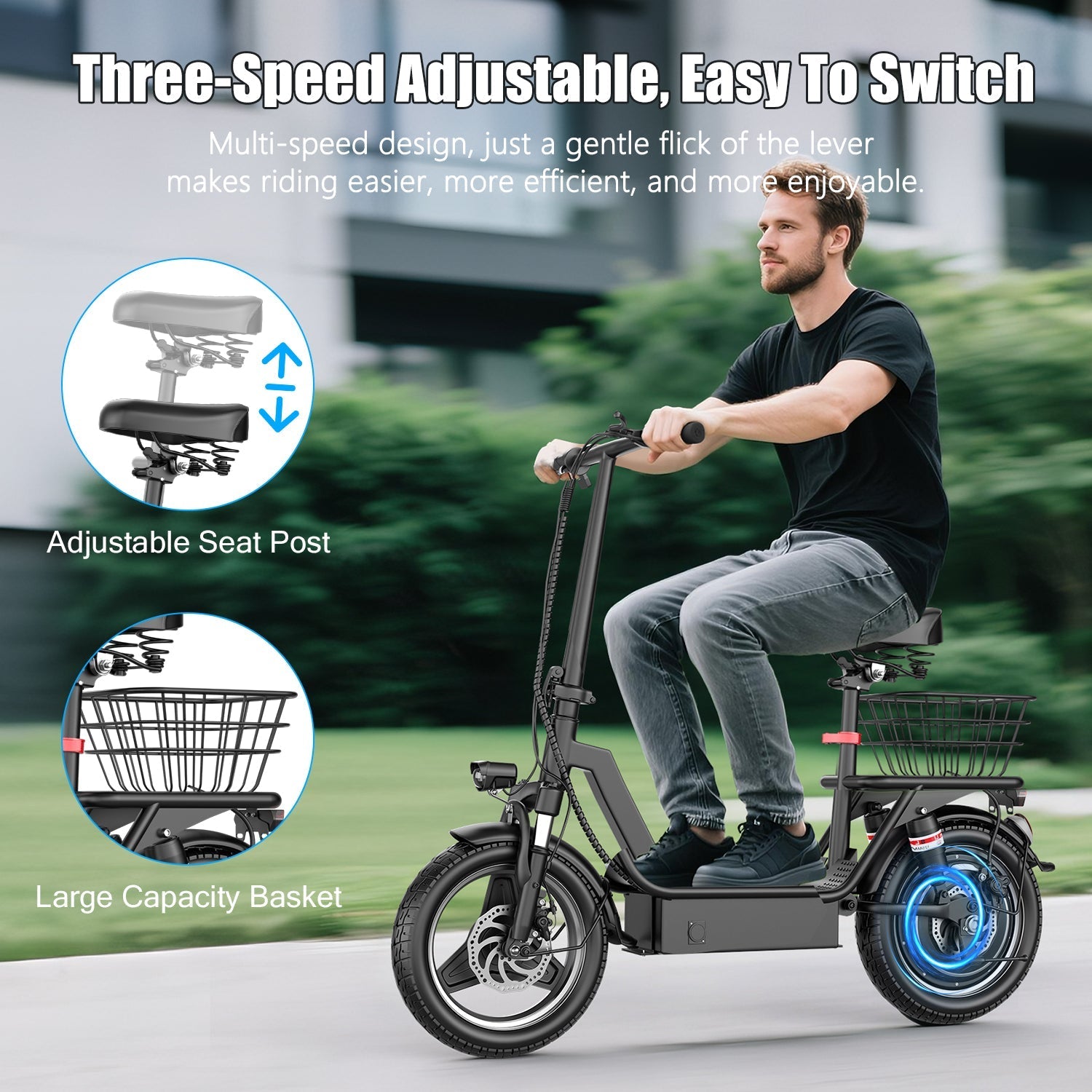
The K10 Electric Scooter suits commuting, shopping, and casual weekend rides. Its adjustable seat, large tires and suspension put comfort ahead of extreme performance. The removable battery also means you can leave the scooter in a garage or hallway and take the battery inside to charge.

- 48V 13Ah removable battery
- Up to 40 miles under ideal conditions
- 14-inch air-filled tires
- Dual suspension
- Folding frame
GT28 for Longer, Hillier Routes
The GT28 Electric Scooter is the better fit when your route is long, steep, or demanding. Its larger battery gives you more breathing room, while the dual motors are better equipped for hills and heavier loads. The trade-off is an 82 lb frame. It folds, but you will certainly notice the weight on a staircase.

- 48V 20Ah, 960Wh battery
- Up to 70 miles under ideal conditions
- 3,000W peak dual motors
- 11-inch pneumatic tires
- Dual suspension
Four Range Mistakes That Leave Riders Stranded
Most riders make some basic mistakes when choosing an electric scooter. They might seem minor at first, but it can be very frustrating when you’re left a few miles from home with no more power.
Avoid these errors:
1. Buying a scooter whose advertised range exactly matches the journey.
2. Comparing battery Ah without checking the voltage.
3. Expecting maximum range while riding at maximum speed.
4. Choosing a heavy long-range scooter without considering comfort, storage, or carrying.
Electric Scooter Range FAQs
How Far Can an Electric Scooter Go on One Charge?
That depends on the initial range. While the advertised range may be possible under ideal conditions, most scooters won’t go that far in the real world. The real-world reduction varies considerably depending on rider weight, speed, hills, weather and tire pressure.
Why Is My Electric Scooter Range Lower Than Advertised?
Advertised range is calculated under ideal conditions. In the real world, rider weight, weather, challenging terrain, or battery age all make it harder to hit the optimum range.
Does Rider Weight Affect Electric Scooter Range?
A heavier rider will get less range overall. The extra weight places additional strain on the electric scooter. If you’re a bigger person, it’s best to go for extra range.
Does Cold Weather Reduce Electric Scooter Range?
It can. Cold weather tends to drain the battery quick, especially in sub-zero temperatures. That’s why it’s best to store the battery in temperate conditions.
What Battery Size Is Good for Commuting?
That depends on your route. Generally, it’s best to select an electric scooter with 1.5X to 2X the range of your intended route. That gives you enough room for any unexpected events.
How Can I Increase Electric Scooter Range?
You can extend the practical range by reducing unnecessary weight, accelerating smoothly, maintaining the correct tire pressure and using a moderate riding mode.
Buy Enough Range to Stop Thinking About It
Electric scooter range is best treated as breathing room. You need enough for the journey, plus the hill you forgot about, the cold morning and the unplanned stop on the way home. Start with your real route, build in a sensible margin and choose a scooter you can rely on without watching the battery display every few minutes.
Find a PostJoy electric scooter with enough range to take the long way home.
Share:
Best Electric Scooter for Adults: Speed, Range, Comfort, and Safety Compared
Electric Scooter Battery Guide: Voltage, Ah, Wh, Charging, and Battery Life