
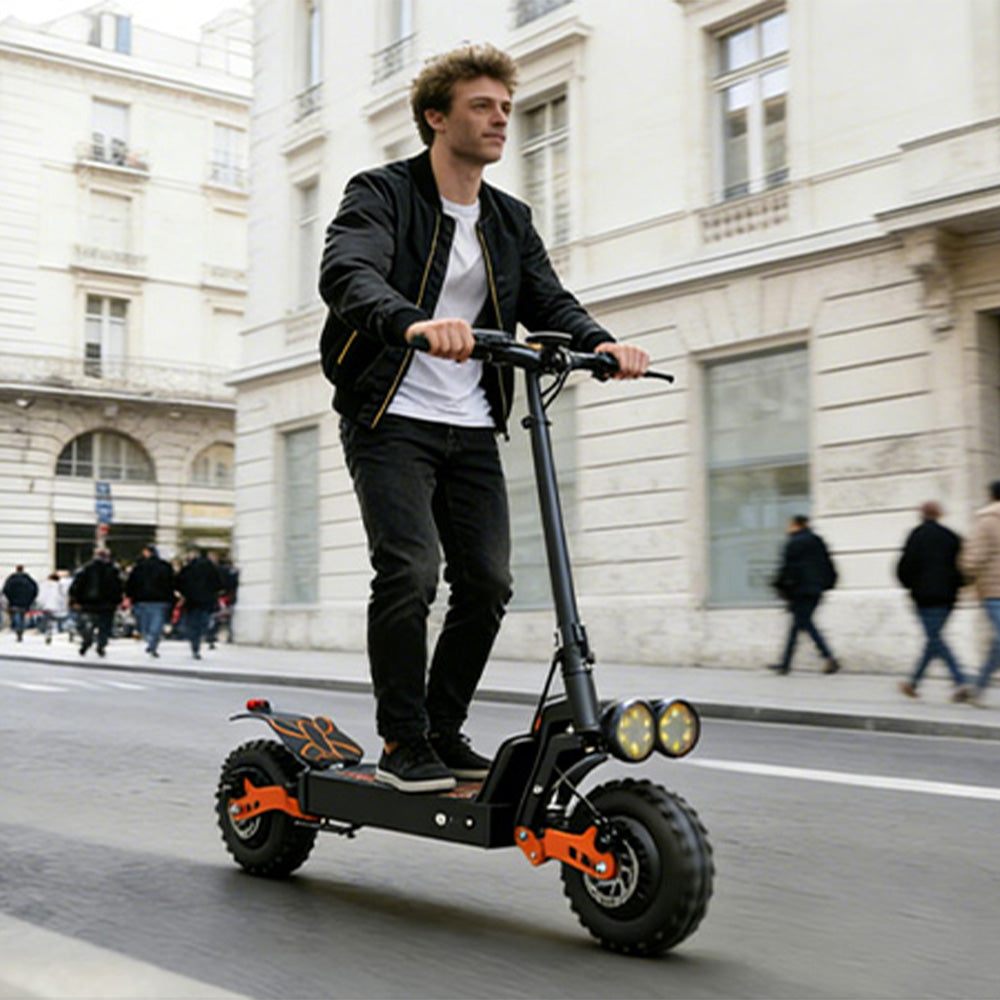
The short answer is yes, electric scooters are street legal in many places. But the rules depend on where you ride. A scooter that is perfectly legal in one city may have different restrictions somewhere else.
The good news is that most riders can legally use electric scooters if they follow local rules and regulations. These usually involve speed limits, safety equipment, rider age, and where scooters are allowed.
This guide explains electric scooter laws in the United States, Canada, and Europe, along with what you should know before riding on public roads.

Understanding Street-Legal Electric Scooter Requirements
There is no universal definition of a street-legal electric scooter. This is because laws are different in every country, state, province, and even individual cities, which is why it's important to understand the rules where you plan to ride. Legal compliance is one part of purchase suitability; the electric scooter buying guide also covers range, speed, brakes, tires, and portability.
Most regulations are based on the same things, including how fast the scooter can travel, how powerful the motor is, the minimum age of the rider, where the scooter can be used, and whether safety equipment such as helmets, lights, and reflectors is required.
For everyday riding, safety features are just as important as performance. Good brakes, bright lights, stable tires, and a strong frame contribute more to a reliable riding experience than speed alone.
Electric Scooter Laws in the United States
Electric scooters are legal in many parts of the United States, but there is no single nationwide law governing them.
States and cities create their own rules, which means requirements can change depending on where you live. Most states focus on speed limits, rider requirements, helmet laws, and where scooters are allowed to operate.
Many areas allow electric scooters in bike lanes and on lower-speed roads. However, they are usually restricted from highways and busy pedestrian areas.
Common public riding speed limits are often around 15–25 mph, but this varies by location.
Some states also have additional requirements. For example, certain areas may require helmets for younger riders, restrict sidewalk riding, or set rules based on scooter speed and motor output.
It's important to pay attention to local rules just as much as state laws. If you don't know about these extra requirements, you could end up with a warning, a fine, or other penalties depending on local regulations.
Electric Scooter Laws in Canada
Electric scooter laws in Canada vary by province and city. There is no single national electric scooter law, so requirements can vary significantly between places like Ontario, British Columbia, Quebec, and Alberta.
Generally, Canadian regulations cover where scooters can operate, maximum speed, rider age, and safety equipment. Many Canadian regulations set electric scooter speed limits somewhere around 24–32 km/h (15–20 mph), but exact limits depend on the province and municipality.
Ontario is a good example. The province allows electric scooters through a pilot program, but individual municipalities decide whether they can be used on local roads and paths. This means an electric scooter may be allowed in one Ontario city but restricted in another.
British Columbia has also introduced electric scooter pilot programs that allow approved communities to manage scooter use locally. Riders in participating areas usually need to follow rules around speed limits, helmet use, and approved riding areas.
Major cities may also create their own rules around sidewalk riding, parking, and shared scooter services.
Canadian riders need to pay attention to local laws governing electric scooters. If you're unsure what is and isn't allowed, check the city's rules before you ride.
Electric Scooter Laws Across Europe
Electric scooters are legal in many European countries, but the regulations vary depending on where you ride.
Most European countries that allow electric scooters set public road speed limits around 20–25 km/h (12–15.5 mph). In many places, your scooter also needs basic safety features such as lights, reflectors, and reliable brakes.
Some countries go further by requiring insurance, registration, or specific vehicle approval before a scooter can be legally used.
Germany is particularly strict when it comes to riding electric scooters. Electric scooters used on public roads in Germany generally need official approval, insurance coverage, and must follow a 20 km/h speed limit.
France allows privately owned electric scooters but introduced tougher regulations after safety concerns increased, including a minimum riding age and a 25 km/h speed limit. Riders who break these rules can face fines, especially for speeding, carrying passengers, or riding in restricted areas.
However, not every European city has welcomed electric scooters. In 2023, Paris residents voted to ban electric scooter rentals after growing concerns about parking problems, pavement clutter, and unsafe riding.
The ban only applied to shared rental scooters from companies like Lime, Dott, and Tier. Riders in Paris can still use their own electric scooters as long as they follow national regulations.
The UK is another example where the rules are very different. Privately owned electric scooters are currently not legal to use on public roads, bike lanes, or sidewalks. London and several other areas have allowed approved rental scooter trials, but privately owned scooters are generally limited to private land with permission.
Sidewalks, Bike Lanes, and Road Riding Rules
Where you can ride depends heavily on local laws, but most cities regulate riding on sidewalks, bike lanes, and public roads.
Riding on Sidewalks
Sidewalk rules are usually the strictest because they involve pedestrians. An electric scooter traveling at 15 mph might feel slow compared with a car, but it is moving much faster than someone walking.
Because of this, many cities limit or completely ban sidewalk riding, especially in busy downtown areas. Even where sidewalk riding is allowed, riders are usually expected to travel slowly, give pedestrians plenty of space, and be ready to stop.
Using Bike Lanes and Roads
In many places where electric scooters are allowed, bike lanes are the preferred place to ride. They separate scooters from faster-moving traffic and crowded pedestrian spaces.
Many cities also allow scooters on lower-speed roads, especially residential streets or areas designed for cyclists. Highways and high-speed roads are almost always off limits.
License, Registration, and Insurance Requirements
The rules around licenses and registration can be confusing because they depend on both location and scooter type.
In many areas, a standard commuter scooter does not require a motorcycle license, but this depends on where you live.
Some regions allow you to ride a standard electric scooter without a license. Others base requirements on rider age, scooter speed, or vehicle classification.
Higher-Powered Electric Scooters
Performance scooters can sometimes fall into a different category.
A scooter with a larger motor and higher speed capability may be treated differently from a smaller city scooter. Riders considering faster models should review the trade-offs in the high-performance electric scooter guide. Some areas consider motor output, maximum speed, or vehicle design when deciding whether extra requirements apply.
This does not mean powerful scooters cannot be used, but riders should understand the rules before taking them onto public streets.
Electric Scooter Safety Tips
Electric scooters are popular because they are simple and convenient. But they should still be treated as motorized vehicles.
Protective Gear and Visibility
A helmet is always a good idea, even when it is not legally required. Many scooter injuries happen from unexpected falls, and protective gear can make a big difference.
Front and rear lights also help other road users see you, especially during early morning rides, evenings, or bad weather.
Younger Riders and Electric Scooters
Parents should be careful when choosing scooters for younger riders.
Electric scooters are heavier, faster, and accelerate more quickly than traditional kick scooters. A scooter that is too powerful can be difficult for an inexperienced rider to control safely. The practical beginner guide to riding an electric scooter safely covers stance, braking, turning, traffic, weather, and pre-ride checks.
The right choice is the scooter that suits the rider's size, experience, and where they plan to use it.
PostJoy Electric Scooters for Daily Transportation
PostJoy electric scooters are designed for riders looking for practical electric transportation for commuting, errands, and everyday use. For route-specific criteria, see how to choose the best electric scooter for commuting.
 The PostJoy GT28 is built for riders who want lots of power and capability. Its 3000W peak dual-motor system provides strong performance for hills and demanding conditions, while the 11x2.5-inch fat tires improve stability.
The front and rear suspension create a smoother ride on uneven surfaces, and dual disc brakes provide controlled stopping power.
Because regulations differ, always check local rules before using higher-powered scooters on public roads.
 For riders focused on everyday convenience, the PostJoy K10 balances comfort and usability.
Its 1000W peak motor, 48V 13Ah battery, and up to 35 miles of range cover most trips. The 14x2.2-inch pneumatic tires, suspension system, foldable frame, seat, and rear basket make it useful for commuting and local travel.
Browse the full PostJoy electric scooter range to find a model that fits your riding style.
PostJoy also offers electric bikes, moped style ebikes, electric dirt bikes, electric mountain bikes, and full suspension ebikes for riders interested in different types of electric transportation.
Final Thoughts
Electric scooters are street-legal in many parts of the US, Canada, and Europe, but each location has its own rules.
Before riding, find out your local speed limits, helmet requirements, license rules, and where scooters are allowed.
A good scooter performs well, is comfortable, safe, and reliable. Choose a scooter that fits your needs, ride responsibly, and follow your local rules.
FAQ
Are electric scooters street legal? Yes. Electric scooters are legal in many areas, but laws vary by country, state, and city. Always check your local laws before riding.
Are electric scooters legal in Canada? Yes. Electric scooters are legal in many parts of Canada, but rules vary by province and city. Always check local regulations before riding.
Are electric scooters legal in Europe? Yes, in many European countries. However, each country has its own rules. Speed limits, insurance requirements, registration rules, and equipment standards vary.
Can electric scooters ride on sidewalks? Sometimes. Many cities restrict sidewalk riding because scooters travel faster than pedestrians. Bike paths and approved roads are usually the better option.
Do electric scooters need insurance? It depends on where you ride. Many areas in the US do not require insurance for standard electric scooters, but some European countries require it.
Are powerful electric scooters street legal? It depends on local laws. Higher-powered scooters may have extra restrictions based on motor output, maximum speed, or how the vehicle is classified.
Share:
Are Electric Scooters Safe?
Best Electric Scooter With Seat: A Complete Guide to Comfortable Riding