
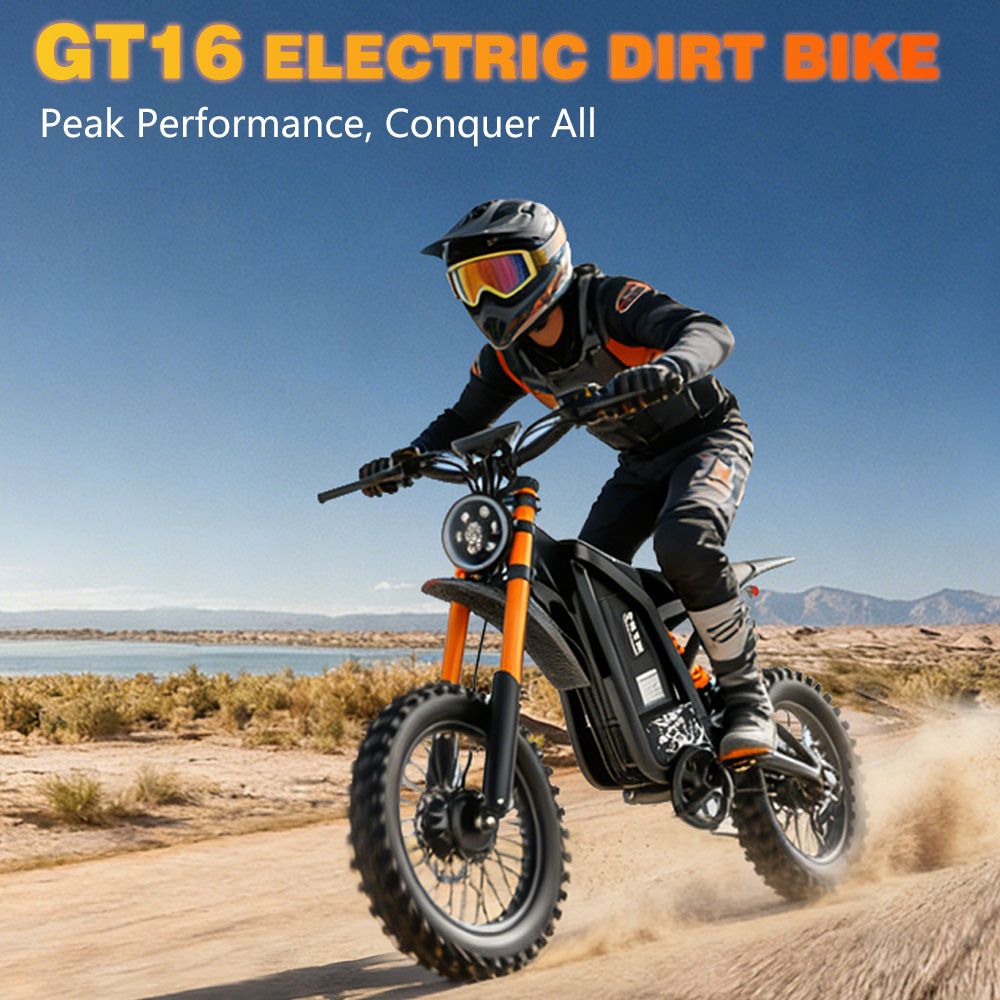
The best electric dirt bike for trails matches the rider and the ground with controllable torque, manageable weight, suitable suspension and tires, predictable brakes, and enough usable range to return with a reserve. It isn't automatically the fastest bike. On a tight, loose climb, a smooth trail electric dirt bike that holds traction is more useful than a powerhouse that lights up the rear tire every time your wrist moves.
Trails expose weak choices quickly. Hardpack asks for precision. Roots and rocks punish poor damping. Mud and sand eat energy. Long descents reveal whether the brakes have feel as well as force. Start with the terrain, then choose the bike.
| Your Trail or Rider Profile | Prioritize First | Be Suspicious Of |
|---|---|---|
| Developing adult rider on maintained trails | Smooth response, correct fit, predictable brakes, manageable recovery | Maximum-speed marketing and an intimidating lowest mode |
| Tight roots, rocks, and switchbacks | Low-speed precision, manageable mass, damping control, protection | Peak power without throttle or heat evidence |
| Open hardpack and gravel | Stable steering, suitable tires, brake feel, puncture planning | Soft-ground tread chosen only because it looks aggressive |
| Mud or sand | Clearing or flotation, smooth drive, heat and range planning | Assuming tire width solves every soft-surface problem |
| Remote or backcountry route | Verified usable range, reserve, communication, navigation, recovery access | A maximum-range claim with no route conditions |
One category warning matters here: an electric dirt bike or e-moto is not automatically a Class 1, 2, or 3 e-bike. Product category, vehicle classification, and trail access are separate questions. Resolve them before choosing a route.
Define a Trail-Ready Electric Dirt Bike Before Comparing Models
A trail-ready electric dirt bike is one that can be controlled, supported, and recovered by its rider on the intended legal route. We use eight checks:
- Fit: confident dabbing, comfortable handlebar reach, and a neutral standing position.
- Control: smooth initial throttle response and riding modes you can understand.
- Traction: tires, weight transfer, and torque delivery that work on the actual surface.
- Chassis: suspension and geometry that stay composed through repeated hits and direction changes.
- Braking: predictable lever response and enough heat capacity for the descents you ride.
- Energy: usable range that covers distance, elevation, surface, load, and a return reserve.
- Protection and support: guarded vulnerable parts, replaceable wear items, and a clear service path.
- Access: the exact bike is permitted on the exact trail that day.
An off-road electric dirt bike is not trail-ready merely because it has motorcycle styling, a high top-speed claim, fat tires, pedals, or a quiet motor. A capable bike can still be wrong for your body, experience, transport setup, or local trail rules. Our broader electric dirt bike buying guide covers the category basics. This guide stays in the dirt.
Use This Electric Dirt Bike Terrain Guide
| Terrain | Useful Power and Handling | Chassis and Tire Priority | Braking and Energy Priority | Main Compromise |
|---|---|---|---|---|
| Hardpack | Progressive response, accurate steering | Supportive suspension, predictable tread | Stable braking, moderate energy demand | Aggressive soft-ground tires can feel vague or wear quickly |
| Gravel | Gentle initial torque, calm chassis | Sidewall support, puncture plan | Progressive brakes, extra attention to stopping distance | More throttle often creates less drive |
| Roots | Precise low-speed control | Active damping, compliant grip | Smooth braking before the obstacle | Excess rebound can kick the bike off line |
| Rocks | Metered drive, easy line changes | Ground clearance, impact control, protection | Brake modulation, recovery planning | Heavy bikes are harder to reposition or lift |
| Mud | Soft response, steady momentum | Clearing tread, protected bearings and connectors | More range reserve, careful brake cleanup | Cleaning and wear increase |
| Sand | Smooth drive, stable steering inputs | Tire flotation, suitable compound and width | High energy and heat awareness | Drag and steering effort rise quickly |
| Climbs | Traction before peak output | Balanced geometry, usable low-speed torque | Thermal awareness, early turn-around decision | Spinning wastes grip and battery |
| Descents | Calm chassis, predictable deceleration | Balanced weight, controlled suspension | Brake feel, rotor heat, mechanical braking capacity | Regeneration cannot replace capable brakes |
Hardpack and Gravel
An electric dirt bike for hardpack should steer accurately and accept small throttle changes without pitching the rider backward. Hard surfaces reward predictable tires and a settled chassis more than huge knobs. On a gravel trail, loose stones reduce braking grip and can deflect the front wheel, so progressive response and an honest puncture plan matter.
Dust also works into pivots, chains, brake areas, and connectors. A tire built mainly for deep soft terrain may squirm or wear faster on firm ground. Check the intended surface, tire compound, replacement availability, and manufacturer pressure guidance before treating one tread pattern as universal.
Roots, Rocks, and Technical Single-Track
An electric dirt bike for technical trails needs clean low-speed control. The first few degrees of throttle matter more here than the last few miles per hour. You want suspension damping that absorbs repeated edges without packing down, enough clearance and protection to survive poor line choices, and a bike you can recover when the trail leans the wrong way.
Peak torque alone doesn't create traction. Tire grip, gearing, controller behavior, rider position, and weight transfer decide whether that torque moves the bike forward or excavates a small hole under the rear wheel.
Mud and Sand
| Surface | What Helps | What Costs You |
|---|---|---|
| Mud | Open tread that clears, smooth drive, protected routing, manageable mass | Cleaning, bearing and drive wear, hidden holes, difficult recovery |
| Sand | Tire flotation, steady momentum, calm steering, temperature awareness | Higher drag, more energy use, more heat, heavier steering |
An electric dirt bike for mud needs more than a broad tire. Tread spacing and compound affect whether the tire clears or turns into a slick. An electric dirt bike for sand needs tire flotation, but width alone doesn't settle the question. Bike weight, pressure guidance, carcass support, heat, and rider technique still count.
Never translate a water-resistance claim into "waterproof." Mud, washing, submersion, and pressurized spray are different exposures. Follow the manufacturer instructions for cleaning and connector care.
Sustained Climbs and Descents
| Route Demand | What to Prioritize | What to Monitor |
|---|---|---|
| Electric dirt bike hill climbing | Metered torque, traction, low-speed balance, stable temperature behavior | Wheelspin, motor or controller heat, battery use, ability to restart |
| Long descents | Brake control, lever fit, chassis balance, suspension support | Rotor heat, fading feel, hand fatigue, changing traction |
Climbing loads the drive system while demanding balance and grip. Descending asks the brakes to turn speed into heat, repeatedly. Regenerative braking can assist where a specific bike documents it, but it cannot replace mechanical brakes and may behave differently by model, mode, or battery state. Plan the turn-around point before the climb drains your range reserve.
Compare Electric Dirt Bike Power for Trails
Peak Numbers Do Not Predict Trail Traction
| Headline Claim | Trail Reality |
|---|---|
| More peak power means better climbing | Only if the tire hooks up and the system can deliver it controllably |
| More electric dirt bike torque means more grip | Torque can spin the tire just as easily as drive it |
| Higher top speed means a faster trail bike | Tight trails reward line choice, braking, and low-speed precision |
| A lower power figure is always limiting | Predictable delivery can be more useful on loose or technical ground |
Rated power and peak power describe different things. Rated power is a sustained specification under defined conditions. Peak power is a short-duration maximum. Don't compare one bike's peak number with another bike's rated number and call the result science.
Useful torque delivery depends on throttle mapping, controller limits, gearing, wheel size, tire grip, temperature, rider load, and body position. A rock doesn't care what the decal says.
Modes, Mapping, Traction, and Regeneration
| Feature | Useful Situation | Possible Downside or Check |
|---|---|---|
| Riding modes | Softening response for loose ground or a developing rider | Labels do not prove how much behavior changes |
| Throttle mapping | Metering power in switchbacks, roots, and ledges | Abrupt first response can overwhelm grip |
| Traction control | Limiting spin on some supported systems | May intervene unpredictably or not exist at all |
| Regenerative braking | Adding deceleration on some descents | Feel may vary; never treat it as the primary brake |
Verify every named feature in the current manual. "Multiple modes" is not enough. You need to know what each mode actually changes.
Evaluate Electric Dirt Bike Suspension for Trails
Suspension Travel, Damping, and Setup Range
| What You Feel | Possible Cause | Purchase Question |
|---|---|---|
| Harsh hit or frequent bottoming | Insufficient suspension travel, poor setup, or limited support | What travel and rider-weight setup range are documented? |
| Bike keeps bouncing after a hit | Rebound damping may be too light or unavailable | Is rebound adjustable and service information available? |
| Suspension stays low through repeated bumps | Rebound may be too slow, a condition riders call packing | Can the system be set and serviced for the rider and terrain? |
| Front dives or rear pitches the rider | Imbalanced spring or compression damping behavior | Are sag and damping procedures in the manual? |
| Wheels deflect sharply off rocks | Tire, wheel, suspension, or geometry mismatch | What setup range and replacement options exist? |
More suspension travel isn't automatically better. Control comes from spring support, compression damping, rebound damping, chassis balance, and correct sag for the rider. Start with the manufacturer's baseline settings, then change one adjustment at a time and record what changed.
Wheel Size, Tire Pattern, and Trail Grip
Electric dirt bike tires for trails should match the surface:
- Firm ground: predictable knobs and supportive sidewalls matter more than maximum width.
- Loose soil: deeper, well-spaced tread can improve bite and clearing.
- Roots and rocks: compound and carcass behavior affect compliance and deflection.
- Mud: open tread helps clear, but maintenance burden rises.
- Sand: added flotation can help, with more drag and steering effort.
Wheel size affects rollover and steering response, but also tire availability and packaging. Confirm the actual sizing convention, approved pressure range, replacement choices, and puncture strategy.
Bike Weight, Geometry, and Rider Fit
| Route Type | Useful Bias | Tradeoff |
|---|---|---|
| Tight, technical trail | Manageable bike weight, quick line changes, comfortable handlebar reach | Less mass can feel busier on rough, open sections |
| Open, faster trail | More stability and room in the standing position | Greater loading, fatigue, and recovery burden |
A lightweight electric dirt bike for trails can be easier to redirect and pick up, but lighter doesn't automatically mean stable, durable, or well suspended. Test seated support, full steering lock, lever reach, standing room, and your ability to recover the bike safely. If it doesn't fit, the rest of the specification sheet is decorative literature.
Which PostJoy Electric Dirt Bike Should You Inspect First?
PostJoy currently offers two electric dirt bike models: the PostJoy GT50 and PostJoy GT16 Plus. Their current pages describe full suspension, off-road tires, and hydraulic brake hardware. The pages also use different tire labels, but those labels may not use an equivalent measurement convention. Do not turn them into a handling verdict without approved dimensions and a ride evaluation.
Inspect the GT50 First When

You specifically want to evaluate the GT50's page-listed approximate outer tire format and can confirm the bike's fit, weight, brake layout, suspension setup range, protection, tire replacements, battery and charger match, range conditions, and transport needs. Skip it if you cannot safely support, recover, or load the bike.
Inspect the GT16 Plus First When

You specifically want to evaluate the GT16 Plus page's smaller listed tire format, removable-battery description, and front-and-rear hydraulic brake listing. Confirm standing room, actual weight, ground clearance, suspension behavior, tire availability, charger compatibility, range conditions, and parts support. Smaller tires do not prove the complete bike is light, agile, or easy to recover.
Choose neither until the critical facts are consistent and one bike clears your terrain, fit, recovery, and legal-access checks. For budgeting beyond the sticker price, use the electric dirt bike cost guide.
Build an Electric Dirt Bike Range and Recovery Plan for Trails
Plan Distance, Elevation, Surface, Load, and Reserve
Electric dirt bike range on trails is a route problem, not a single product-page number.
Nominal watt-hours provide a basic battery-energy comparison: voltage multiplied by amp-hours equals nominal watt-hours. They still do not predict trail miles. Usable energy, controller efficiency, temperature, speed, climbing, tire setup, surface, and rider load all change the result.
| Route Input | What to Record |
|---|---|
| Distance and elevation | Total route, climbing, steep sections, return profile |
| Surface | Hardpack, gravel, roots, rocks, mud, sand, and transitions |
| Rider and load | Rider, protective gear, tools, water, and carried items |
| Conditions | Temperature, wind, recent rain, and expected trail softness |
| Bike setup | Tire setup, riding mode, and manufacturer-approved settings |
| Ride pattern | Expected speed, technical sections, stops, and restarts |
| Energy plan | Start state, turn-around point, battery range reserve |
| Recovery | Communication, navigation, pickup access, and disabled-bike plan |
Hypothetical example: imagine an 18-mile out-and-back route with roughly 1,500 feet of climbing, a mix of hardpack and rocky single-track, cool weather, a fully geared rider, a recorded starting battery state, and no vehicle access at the far end. Don't borrow a road-range claim and call the plan finished. First measure consumption on shorter local loops with similar terrain and setup. Establish a conservative battery range reserve from those observations. If the outbound leg uses energy faster than planned, conditions deteriorate, or the hardest climbing sits on the return, turn around early.
That is real-world trail range planning. The point isn't a magic percentage. It is noticing when today's ride no longer matches the assumptions you left home with.
Plan Charging, Communication, and Bike Recovery
Your trail ride recovery plan should answer these before departure:
- Is charging access legal, dry, and suitable for the approved charger?
- Are the battery, charger, cable, and connectors undamaged and dry?
- Does someone have your route and expected return time?
- Do you have navigation that still works without cell service?
- Are you carrying only tools and procedures permitted by the manufacturer?
- Where can a vehicle legally reach you if the bike stops?
- Can you push or move the disabled bike through the hardest section?
- Is your bike transport setup rated and ready for pickup?
Do not attempt a lift or push beyond your physical ability. Arrange help instead. Do not improvise an unapproved tow method or open the battery or controller on the trail. A dead bike is inconvenient. A damaged high-energy electrical system is a different category of problem.
Check Electric Dirt Bike Brakes for Trails, Protection, and Parts
| Stop | Protect | Survive | Repair |
|---|---|---|---|
| Hydraulic brakes, reachable levers, progressive feel, suitable rotor and heat capacity | Skid plate or motor guard, routed hoses, guarded connectors, battery retention, chain or belt guard | Secure fasteners, sensible cable routing, impact checks, manufacturer cleaning guidance | Replacement parts, brake pads, tires, drive parts, manuals, warranty terms, support contact |
Pulling a lever in a showroom tells you about reach, not repeated-descending performance. Confirm front and rear brake configuration, pad and rotor availability, service procedure, and any load limitations. Look underneath the bike, too. Trails tend to find the one connector or drive component the beauty shots forgot.
Verify Electric Dirt Bike Trail Access and Etiquette
An electric motor, low noise, or pedals do not automatically grant electric dirt bike trail access. Legal trails are the routes whose current rules explicitly allow your vehicle class. Before riding, verify:
- The bike's classification with the relevant motor-vehicle or off-highway vehicle authority.
- The current official land-manager page and trail map.
- Whether the route is open to that vehicle class, not merely to bicycles.
- Permit, registration, sticker, age, helmet, and equipment requirements.
- Seasonal closures, fire restrictions, and temporary route notices.
- Private-property permission and any local ordinance.
After you confirm the vehicle classification, the U.S. Forest Service e-bike guidance and Bureau of Land Management e-bike guidance are useful starting points for U.S. federal land. Those pages do not make every electric dirt bike an e-bike, and the posted rule for the specific route still controls. Both official sources were reviewed on August 16, 2026. Our guide to are electric dirt bikes legal explains the broader classification questions.
On legal trails, slow around other users, respect closures and one-way rules, avoid cutting switchbacks, and don't turn wet ground into a trench. Quiet isn't the same as invisible.
Match Trail Capability to Rider Experience
Electric Dirt Bike for Beginner Trail Riders
A beginner trail electric dirt bike should have smooth first throttle response, manageable weight, predictable brakes, correct seated and standing fit, forgiving setup, and a clear service path. Avoid buying for maximum speed or future ambition. A new rider should not need expert reflexes to cover for poor fit or abrupt power.
Wear a helmet certified for the relevant vehicle type and jurisdiction, eye protection, gloves, over-the-ankle boots, and appropriate body protection. Learn the throttle and brakes in a legal, flat, controlled area before adding loose surfaces or remote terrain. Our beginner electric dirt bike guide covers that first-bike decision. For adult fit, see the best electric dirt bike for adults.
Experienced Trail Rider and More Technical Routes
An experienced rider may need a wider suspension setup range, predictable behavior under sustained load, better impact protection, route-relevant range evidence, and available wear or crash parts. Demand manuals, service information, documented adjustment scope, comparable test conditions, underside details, and a current support path.
Experience doesn't fix a cramped cockpit, missing parts, uncertain charger, or unsuitable trail classification. Skill raises the questions. It doesn't lower the evidence standard for a technical trail electric dirt bike.
Score and Compare Electric Dirt Bikes for Trails
Before scoring any candidate for best electric dirt bike for trails, verify the source and review date for price, rated or peak motor output, battery, charger, speed, range conditions, payload, bike weight, fit dimensions, brakes, tires, suspension, water resistance, warranty, and included equipment.
If a critical field is missing or conflicts with another approved source, mark the bike not ready to shortlist. Do not award an average score because the photograph looks convincing.
| Trail Fit Category | Weight | What Earns Points |
|---|---|---|
| Terrain fit | 25 | Power behavior, tires, geometry, protection, and energy demand match the route |
| Rider fit and recoverability | 20 | Correct reach and standing room; rider can support, recover, load, and store it |
| Controllable power | 15 | Clear rated and peak definitions, predictable response, useful verified modes |
| Suspension and handling | 15 | Appropriate setup range, damping behavior, stability, steering, serviceability |
| Brakes and protection | 10 | Lever fit, modulation, heat capacity, routing, guards, replacement wear parts |
| Usable range and recovery | 10 | Route works with reserve; charging, communication, navigation, and pickup planned |
| Service and parts | 5 | Current documentation, warranty path, contact channel, and parts availability |
Rate each category from 0 to 5, then multiply that rating by the category weight divided by 5. A 4/5 terrain score, for example, earns 20 of the available 25 points. Use verified evidence for every rating.
The scorecard deliberately lets a slower bike beat a faster one. On trails, the slower bike may still be the better choice if it fits, finds traction, stops predictably, and completes the route with reserve.
Perform a Short Electric Dirt Bike Trail Maintenance Check
Complete a post-ride inspection before the next charge or ride:
- Let the bike cool and inspect it before cleaning.
- Use a dry or manufacturer-approved cleaning method. Do not pressure-wash electrical areas.
- Check tires, wheels, spokes or fasteners, and any new cuts or impacts.
- Inspect brakes, rotor area, chain or belt drive, guards, and skid protection.
- Check cables, connectors, battery area, and controls. Do not charge a wet or damaged bike. The NFPA e-bike and e-scooter safety guidance provides additional lithium-ion battery and charging safety information.
Use the electric dirt bike maintenance guide for the fuller routine.
Best Electric Dirt Bike for Trails FAQs
How much range does an electric dirt bike get on trails?
Electric dirt bike trail range has no universal number. Elevation, surface, speed, riding mode, rider and gear load, temperature, tire setup, stops, and technical sections all change consumption. Validate the bike on shorter similar routes, then plan a conservative return reserve.
How much power is enough for trail riding?
Electric dirt bike power for trails is enough when it delivers controllable drive for the terrain without overwhelming traction or the rider. Judge throttle response, gearing, heat behavior, bike weight, chassis, tires, and skill together. A peak-watt threshold alone is not useful.
Are electric dirt bikes allowed on mountain-bike trails?
Not automatically. Electric dirt bike trail rules depend on vehicle classification and the land manager's current route designation. Check the official map, posted rule, seasonal notice, and local requirements for the exact bike. Pedals, low noise, or electric drive do not create access.
Are fat tires best for electric dirt bike trails?
Sometimes. Fat tires for trail riding can add flotation and comfort on soft ground, but they can also add weight, drag, and slower steering. Compound, knob pattern, sidewall support, pressure guidance, bike geometry, and the actual terrain matter as much as width.
Compare Verified Trail Options
Apply the terrain matrix, route plan, and verified-spec check first. Then compare PostJoy electric dirt bikes, including the GT50 and GT16 Plus, on fit, control, suspension, tires, brakes, recoverability, usable range, and support. A verified match is worth more than an unsupported winner badge.
Share:
What is a brushless motor on an e-bike?
Best Electric Dirt Bike for Beginners: How to Choose Your First Bike