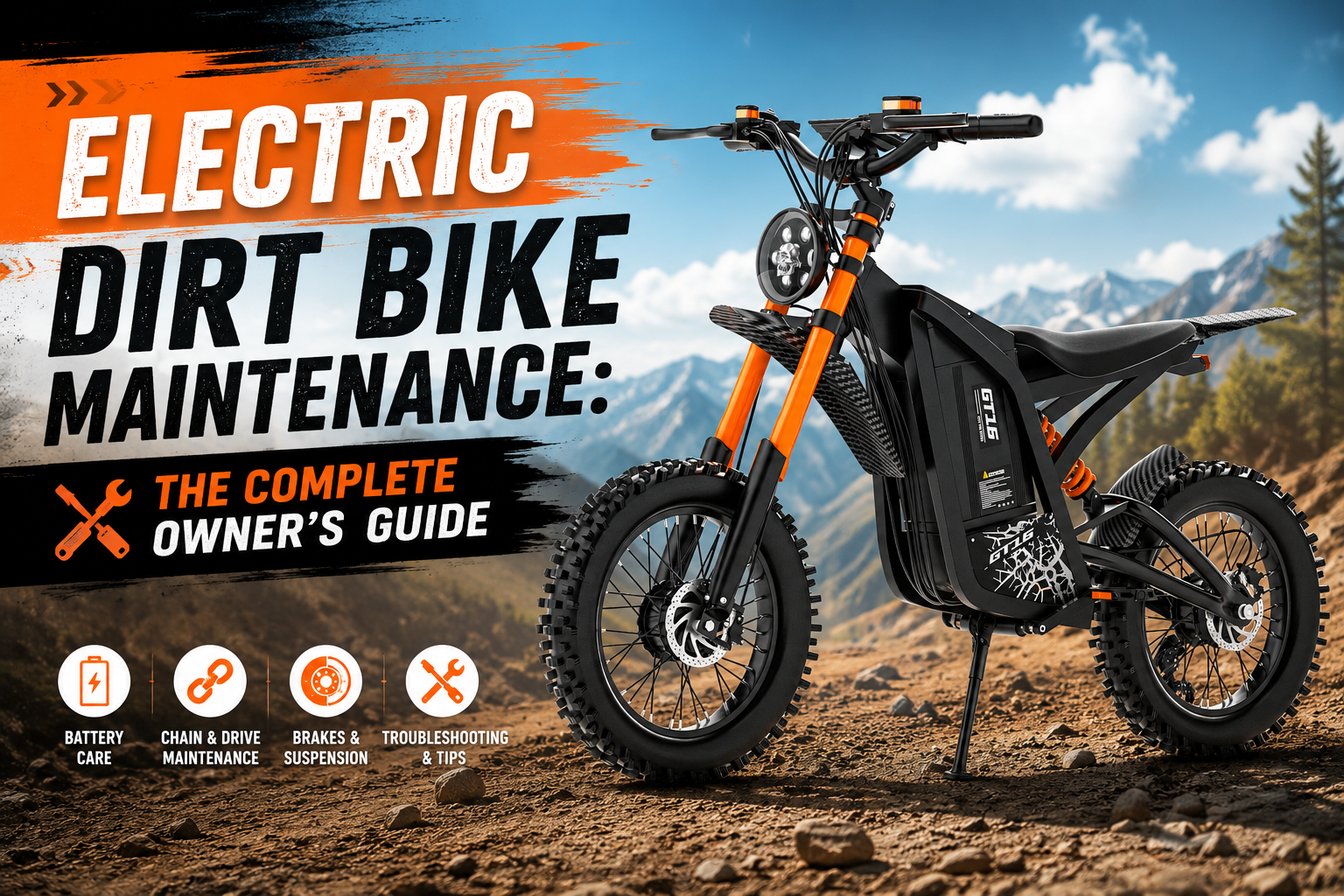
Electric dirt bikes are a lot simpler than their petrol bikes. Just like electric cars to conventional cars, there are fewer moving parts, less oil and grease, and a simpler overall system. That doesn’t mean they’re “maintenance-free,” however.
You invest a lot of money when you buy an electric dirt bike. Spending a little time between each ride looking after the motor, the battery, and the overall frame can safeguard your investment, protecting the bike. It also means it will have a good resale value if you come to sell.
But what exactly is included in electric dirt bike maintenance? Below, we cover everything you need to know to keep your electric dirt bike in premium condition.

What Maintenance Does an Electric Dirt Bike Need?
The Major Components That Require Attention
Electric dirt bikes sit somewhere between an e-bike and a petrol dirt bike. You’ve got some basic features like brakes, suspension, chain and drive train, frame, and tires that require the same attention as you’d expect for any dirt bike.
The real difference is the motor and battery.
Most of the big repairs with a dirt bike aren’t the chain or the brakes. It’s when the engine has an issue. That’s where the costs add up. Electric dirt bikes are much simpler, relying solely on a battery and motor. But they’re also the areas that need the most attention.
How Electric Dirt Bike Maintenance Differs From Petrol Bikes
Electric dirt bikes don’t require the same maintenance as most dirt bikes do. There are:
· No oil changes
· No air filters
· No spark plugs
· No fuel system maintenance
The obvious benefit is that the overall servicing requirements and associated costs are lower. Electric dirt bikes are much easier to maintain, requiring less skill and less investment. It’s a great option for beginners and pros alike.
Create a Regular Electric Dirt Bike Maintenance Schedule
Before Every Ride
Testing your bike before every ride might seem like overkill. However, there are a few basic issues it’s worth checking. It doesn’t have to take more than a few minutes. Start by giving the bike a quick visual inspection, then a short ride before you head off.
Follow these steps:
· Check battery charge level
· Inspect tires for wear and damage
· Test brakes
· Check chain tension
· Inspect controls and throttle operation
· Look for loose bolts or damage
Weekly Checks
Depending on how often you use the electric dirt bike, a weekly check can be sensible. You’ll want to give the bike a thorough clean, removing any dirt or dust that can increase wear and tear. Lubricate the chain, inspect the brake pads, and check tire pressures.
Together, it shouldn’t take more than 10-30 minutes. Long-term, it can prolong the life of the bike by years.
Monthly Checks
Monthly (or quarterly) checks can make a real difference. You’ll need to tighten critical fasteners, check the wheel bearing, and inspect wiring and connections.
Battery health is also a big factor. Over time, batteries naturally decline in capacity. Reviewing battery health data (if available) can help you monitor the decline and change charging habits if necessary.
Annual Servicing
The annual service brings your electric dirt bike back into top condition. It’s best not to check it yourself unless you’ve got the experience. A professional repair and maintenance service can:
· Perform a comprehensive safety inspection
· Service the forks and rear shock
· Check bearings, bushings, and wheel assemblies
· Inspect the battery, motor, and electrical system
· Replace worn brake components
· Tighten and torque key fasteners
· Identify and resolve developing faults
Battery Maintenance: The Most Important Part of Electric Dirt Bike Ownership
Batteries are the most expensive component of any electric dirt bike. While the size of the fuel tank and engine type determine range and performance in fuel-based dirt bikes, the battery is the main factor in an electric bike.
The size of the battery affects how far you can go, how fast you can go, and also how heavy the bike is. Batteries add a lot of weight to the bike, so while they can boost performance, it comes at a cost.
Looking after the battery can reduce the lifetime cost of the bike. Replacing the battery is by far the costliest repair possible. But with the right maintenance, you can significantly extend battery life.
Best Charging Practices
Most battery decline comes down to how the battery is charged. People either let their battery drain to 0% or charge up the bike to 100% and leave it for extended periods. Both of these states will damage the battery.
Ideally, you want the battery to sit somewhere between 20% to 80% most of the time. Think of this as the “Goldilocks zone of charging.”
Otherwise, follow the manufacturer’s charging recommendations and only use approved chargers.
Battery Storage Guidelines
Where and how you store the bike will also affect the battery. Leaving the bike outside in the cold can severely deplete the battery.
You will want to store the bike:
· In a cool, dry location
· Away from direct sunlight
· Protected from extreme heat or freezing temperatures
· At a partial charge level (typically 40–60%)
· Away from moisture and humidity
· Checked periodically during long-term storage
Common Battery Mistakes That Shorten Lifespan
The most common battery mistakes are also the most obvious. Avoid leaving the bike in a state of deep discharge or in extreme temperatures. Using incompatible chargers is also a problem. People frequently opt for cheap chargers, hoping to save money. But it can end up damaging the battery itself.
How to Clean an Electric Dirt Bike Properly
Like for any bike, dirt, dust, and moisture can corrode paintwork, cause rust, and generally damage the bike’s mechanism.
Regular cleaning prevents damage or makes it easier to spot, improving component longevity. Depending on how often you use the bike, you’ll want to clean it either every week or monthly. If you’ve had a particular dirty session, it’s smart to give it a low-pressure rinse.
Safe Cleaning Process
Follow these steps to clean your electric dirt bike safely:
1. Allow the bike to cool completely before cleaning.
2. Remove heavy mud and debris with a soft brush.
3. Rinse the bike using low-pressure water.
4. Wash with a bike-safe cleaner and a soft sponge.
5. Clean the chain separately using an appropriate degreaser.
6. Rinse thoroughly, avoiding electrical components where possible.
7. Dry the bike with a clean cloth and allow any remaining moisture to evaporate.
8. Lubricate the chain once the bike is fully dry.
Areas That Need Extra Attention
Not all parts of the bike are equal. Some need a little more TLC than others.
You want to pay close attention to areas where rust or corrosion can cause costly damage or impair the bike’s function. The chain, for example, can commonly break or create friction if dirt and rust build up.
Suspension and brake components, alongside electrical connectors, are similar. If rust and corrosion set in, it can impair function or permanently damage the connection.
What Not to Do
It’s tempting to blast the bike with a pressure washer to remove the built-up dirt. Or to use harsh chemicals to cut through any accumulated grime. That’s a mistake.
Avoid using pressure washers near bearings or directly spraying electrical systems. While electric dirt bikes are designed to be partially waterproof, they can’t withstand a pressure washer for prolonged periods.
Chain and Drivetrain Maintenance
Electric dirt bikes deliver instant torque from the moment you twist the throttle. This immediate power puts intense stress on the chain and sprockets, particularly during hard acceleration and off-road riding.
Keeping the chain and drivetrain clean and lubricated helps maintain performance, reduce wear, and extend the lifespan of your bike.
How to Clean the Chain
Cleaning the chain removes dirt, mud, and old lubricant that can damage the drivetrain over time.
Follow these steps:
1. Place the bike on a stand if possible.
2. Remove loose dirt with a brush or cloth.
3. Apply a chain-specific cleaner or degreaser.
4. Scrub the chain gently using a chain brush.
5. Wipe away any residue with a clean cloth.
6. Allow the chain to dry before lubricating.
When cleaning, inspect the chain for stiff links, rust, excessive dirt buildup, and signs of wear on the sprockets.
How to Lubricate the Chain Correctly
Once the chain is clean and dry, apply a quality chain lubricant designed for off-road riding conditions.
Apply a thin, even coating to the inside of the chain, slowly rotating the wheel. Give the lubricant time to penetrate before wiping away any excess. Don’t over-lubricate, as this can attract more dirt and debris.
Signs Your Chain Needs Replacing
Chains don’t last forever — even with proper maintenance. Common signs that replacement may be needed include:
· Excessive chain stretch
· Tight or stiff links
· Increased drivetrain noise
· Visible sprocket wear
· Difficulty maintaining correct chain tension
If you think your chain needs replacing, don’t wait. Get it replaced ASAP to avoid damage to or other drivetrain components.
Brake Maintenance and Safety Checks
When you’re hurtling along at high speeds, your brakes are one of the only safety systems you can rely on. That’s why you want to ensure you have reliable stopping power in all riding conditions.
Checking Brake Pads
Brake pads wear down every time you push the lever. That’s normal. But you’ll need to inspect them regularly to see if they need replacing.
Look for:
· Visible wear indicators
· Uneven wear patterns
· Cracks or damage
· Excessively thin brake material
If the friction material is approaching the manufacturer's minimum thickness recommendation, the pads should be replaced.
Inspecting Brake Rotors
Brake rotors don’t wear out as quickly as brake pads. However, it’s still smart to check them for damage whenever you inspect the pads.
Look for:
· Warping or wobbling
· Deep grooves or scoring
· Cracks or chips
· Excessive wear
Damaged rotors will increase pad wear or affect your braking performance and should be replaced if necessary.
Brake Fluid Maintenance
If your electric dirt bike uses hydraulic brakes, it relies on brake fluid to operate correctly. That fluid can absorb moisture and become less effective over time. Follow the manufacturer’s recommended service intervals for fluid replacement and bleeding.
Warning Signs of Brake Problems
Never ignore a problem with your brake system. Far better to change a component when signs first begin to appear than to have an accident because your brakes failed when you need them the most.
If you notice any of the following issues, inspect the braking system immediately:
· Reduced stopping power
· Squealing or grinding noises
· A spongy brake lever feel
· Excessive lever travel
· Vibration during braking
Suspension Maintenance for Off-Road Riding
Off-roading puts your electric dirt bike under intense strain. Every bounce and bump is absorbed by your suspension, keeping the bike stable and under control. But dirt, mud, water, and repeated impacts add up over time, affecting suspension performance.
Neglecting suspension maintenance is both common and risky. If your suspension begins to decline, it can cause you to lose control of the bike, potentially leading to a serious accident or costly repair,
Inspecting Forks and Rear Shock
The front forks and rear shock are some of the most complicated components of a dirt bike. It’s easy to miss potential damage. You’ll want to look for:
· Oil leaks around seals
· Scratches on fork tubes
· Damaged seals or dust covers
· Unusual noises during compression
· Reduced damping performance
Basic Suspension Care
Suspension care doesn’t require specialist tools. Most of it is simply cleaning the system and checking to ensure everything is connected.
You should:
· Clean fork tubes after muddy rides
· Remove dirt from seals and dust covers
· Check mounting bolts for tightness
· Inspect linkage components for wear
· Monitor suspension performance over time
If during maintenance you spot oil leaking or the suspension becomes harsh or inconsistent, it’s worth taking it to a professional suspension service. They can replace seals, change fluids, and give internal components a closer inspection.
Tire and Wheel Maintenance
Tire Pressure Checks
Correct tire pressure is critical for both grip and control.
Underinflated tires feel more unstable and wear out quickly. They also increase overall rolling resistance, draining your battery each ride. Overinflated tires, on the other hand, can lose traction on loose terrain.
Always follow the manufacturer's recommended pressure range and adjust where appropriate for riding conditions.
Inspecting Tires and Wheels for Damage
Always check your tires for wear or damage before each ride. Look for:
· Cuts or punctures
· Cracked sidewalls
· Missing or damaged knobs
· Uneven tread wear
· Embedded stones or debris
The same is true for wheels. Inspect for loose or damaged spokes, bent or cracked rims, bearing play, or general signs of impact. Don’t ride on a broken wheel or a flat tire. It’s just not worth the potential downsides (even if it is disappointing).
Electrical System Maintenance
Removing the gasoline parts simplifies maintenance. But there are still the electric components that can cause issues. It can save you a lot of money to spend a little time each month looking over everything to ensure it’s working correctly.
Checking Connectors and Wiring
Connectors and wiring are the most common places for corrosion or damage to occur. Look for loose connections, obvious corrosion, cracked insulation, frayed wiring, or water ingress.
Never try to fix these problems yourself. You’ll need an experienced repair professional.
Monitoring Diagnostic Systems
Unlike with fuel systems, it can feel like you're flying blind with an electric system. There are no moving parts to evaluate.
That’s why many modern electric dirt bikes include onboard diagnostics or companion apps that monitor system health.
Check periodically for:
· Error codes
· Battery health information
· Firmware updates
· Performance warnings
Battery health is one of the biggest things to check. It can decline quickly if you store the bike incorrectly or leave the battery drained.
Protecting Electronics From Water and Dirt
Your bike's frame or wheels won’t automatically become damaged by leaving the bike outside. That’s not the same for the electrical components. Exposure to water and dirt can cause pressure over time.
Avoid pressure washing electrical parts, keep charging ports dry, and store the bike in a sheltered location to minimize damage.
Signs Your Electric Dirt Bike Needs Professional Servicing
If you’re new to electric dirt bikes (or are used to servicing your gasoline bike), it’s tempting to handle the repairs and servicing yourself. But electric bikes work quite differently, often requiring specialist tools to evaluate performance.
If you notice any of the following issues, it's worth having your bike inspected by a qualified technician:
· Performance changes. Reduced range, slower acceleration, or a noticeable loss of power.
· Unusual noises. Grinding, clicking, rattling, or excessive drivetrain noise during operation.
· Battery warning signs. Charging problems, rapid battery drain, overheating, or error messages.
· Brake issues. Reduced stopping power, squealing brakes, or a spongy brake lever feel.
· Suspension problems. Oil leaks, harsh ride quality, or reduced damping performance.
· Safety concerns. Loose components, damaged wheels, frame cracks, or electrical faults.
Common Electric Dirt Bike Maintenance Mistakes
Ignoring Battery Care
The battery is the most valuable part of your bike. Poor charging and storage habits will inevitably lead to battery degradation.
Avoid draining the battery quickly (or leaving it fully charged for extended periods), storing the bike in extreme temperatures, or using unsuitable charging equipment.
Overwashing the Bike
Dirt can cause damage. But so can excess cleaning.
High-pressure water can force moisture into bearings, seals, and electrical connections, potentially leading to premature wear or corrosion.
Neglecting the Chain
The chain is another core component of the bike. If neglected, it reduces efficiency and can damage sprockets.
It’s worth taking the time to lubricate and inspect the chain — after all, it only takes a few minutes.
Skipping Pre-Ride Inspections
We get it. You’ve got the bike out; you’re looking at the trail; you’re ready to get going.
The last thing you want to do is spend time checking the battery, tires, brakes, chain, and controls. However, it doesn’t take long and can help prevent breakdowns or safety issues.
Delaying Repairs
Small problems rarely improve on their own.
Addressing worn components, unusual noises, or minor faults early is often far cheaper than waiting for a major failure to occur.
Using Non-Approved Chargers
Not all chargers are compatible with every battery system.
Using non-approved chargers can reduce battery life, affect charging performance, and, in some cases, damage the battery. Always use equipment recommended by the manufacturer.
Electric Dirt Bike Maintenance Checklist
|
Maintenance Task |
Before Every Ride |
Weekly |
Monthly |
Annually |
|
Check battery charge |
✓ |
|
|
|
|
Inspect tyres and tyre pressure |
✓ |
|
|
|
|
Test brakes |
✓ |
|
|
|
|
Check chain tension |
✓ |
|
|
|
|
Inspect for damage or loose bolts |
✓ |
|
|
|
|
Clean the bike |
|
✓ |
|
|
|
Lubricate the chain |
|
✓ |
|
|
|
Inspect brake pads |
|
✓ |
|
|
|
Check suspension seals |
|
✓ |
|
|
|
Inspect wiring and connectors |
|
|
✓ |
|
|
Check wheel bearings |
|
|
✓ |
|
|
Review battery health |
|
|
✓ |
|
|
Full safety inspection |
|
|
|
✓ |
|
Suspension service |
|
|
|
✓ |
|
Brake fluid replacement (if applicable) |
|
|
|
✓ |
Keep Your Electric Dirt Bike Running at Its Best
Electric dirt bikes may require less maintenance than petrol models, but a little care goes a long way. Looking after the battery, chain, brakes, suspension, and tires can improve performance, extend the bike's lifespan, and help you avoid costly repairs.
Explore PostJoy's range of electric dirt bikes if you're looking for a reliable electric dirt bike for your next off-road adventure. With the right maintenance routine, your bike will stay trail-ready for years to come.
FAQs
How often should you service an electric dirt bike?
Depending on usage, anywhere from every few months to once a year. It’s best to service an electric dirt bike once a year, even if it hasn’t been used a lot.
Do electric dirt bikes need oil changes?
No. However, you will need to change the brake fluid, monitor battery health, and keep the bike charged.
How long does an electric dirt bike battery last?
Most electric dirt bike batteries last between 500 and 1,000 charge cycles. For the average rider, this typically translates to 3-8 years of use.
Can you wash an electric dirt bike with water?
Yes. You can use water to clean an electric bike. Avoid pressure washing as this can force water into electrical components, causing permanent damage.
How often should you lubricate an electric dirt bike chain?
The chain should be lubricated whenever it appears dry and after cleaning the bike.
What is the most expensive part to replace on an electric dirt bike?
The battery. Depending on the model and battery capacity, replacement costs can range from several hundred to several thousand dollars.
Are electric dirt bikes easier to maintain than petrol dirt bikes?
Yes. Electric dirt bikes have fewer moving parts and do not need oil changes, air filter replacements, spark plug changes, or fuel system maintenance.
Share:
How Much Does an Electric Dirt Bike Cost? 2026 Price and Ownership Guide
Electric Bike vs Scooter for Commuting