What size electric dirt bike do I need? Use your height to build a shortlist, then confirm the size with your measured inseam, effective seat height under rider sag, foot contact, cockpit room, geared-up weight, bike mass, skill, and terrain. No single height chart can finish that job because two riders who stand equally tall can be built very differently.
This guide gives you a practical electric dirt bike fit process you can use across brands. It also tells you when a bike is too tall, too cramped, too heavy, or simply too powerful for the rider who has to control it.
Electric Dirt Bike Size: The Five-Check Short Answer
| Check | What to Measure or Test | Desired Result | Stop and Reconsider When |
|---|---|---|---|
| 1. Inseam and effective seat height | Measured inseam, published seat height, and loaded height under rider sag | You can establish stable foot contact appropriate to your experience and terrain | Stops feel like a balancing act before the bike even moves |
| 2. Foot contact | Sit in normal boots with the bike upright and secured | You can support the bike confidently on both sides or use a controlled one-foot stop | You slide off the seat, lock a knee, or cannot catch a small lean |
| 3. Cockpit room | Seat-to-peg room, knee clearance, and handlebar reach | Relaxed elbows seated, neutral standing position, clear knees | Bars pull you forward, knees hit, or the seat traps movement |
| 4. Rider and gear load | Rider, boots, protection, pack, tools, and cargo | Total stays below a verified max payload and the suspension can be set correctly | Payload is missing, exceeded, or suspension suitability is unknown |
| 5. Bike mass and control | Balance, walk backward, turn, load, recover, and meter the throttle | The bike is manageable when stationary and predictable when powered | You cannot safely move it or the initial power response outruns your skill |
Passing one row does not erase a failure in another. Easy ground reach cannot fix a cramped cockpit. A roomy cockpit cannot make a bike light enough to recover. And a low seat does not turn advanced power delivery into beginner equipment.
How to Measure for an Electric Dirt Bike
Measure your body first. Then compare it with the bike's unloaded specifications and, finally, the way the bike settles with you aboard. Those are three different sets of information.
Measure Your Inseam for Dirt Bike Fit, Not Your Jeans Inseam
- Stand with your back against a wall, shoes off, and feet naturally spaced.
- Place a hardback book between your legs with its spine facing upward.
- Keep the book level and lift it firmly enough to simulate saddle contact.
- Measure from the floor to the top edge of the book.
That floor-to-book distance is your measured inseam. Record it in inches and centimeters. To convert inches to centimeters, multiply by 2.54. Your pants label is not a shortcut. Jeans have misled enough riders already.
WALL
               |
        rider  |       top edge of book
          O    |      <-----------------
         /|\   |      ==================
         / \   |              ^
               |              |
FLOOR __________|______________|________
                              measure
                         floor to top edge
Diagram description: how to measure inseam for electric dirt bike sizing. The endpoints are the finished floor and the top edge of a level hardback book. Repeat the final on-bike check in your normal riding boots because sole thickness and stiffness change foot contact.
Compare Electric Dirt Bike Seat Height With Rider Sag and Standover
- Published seat height: usually an unloaded measurement from the ground to a defined point on the seat. Confirm the manufacturer's method.
- Effective seated height: how high and wide the seat feels after the suspension settles under the rider.
- Rider sag: the amount the suspension compresses with the geared-up rider aboard, set according to the manufacturer's procedure.
- Standover height: clearance at the frame or seat area when you stand over the bike. It is not interchangeable with seated reach.
A narrow seat can be easier to reach around than a wide seat with the same published height. Rider sag can also change foot contact, but it is a suspension setup parameter, not a free lowering trick.
Check the Dirt Bike Cockpit and Handlebar Reach
- Seated: elbows stay slightly bent and wrists remain neutral through full steering lock.
- Standing: you can rise onto the pegs without hanging from the bars or folding sharply at the hips.
- Moving: knees clear the handlebar and frame as you shift forward and back.
Most product pages do not publish complete cockpit dimensions. Treat this as an on-bike confirmation. A bike can be low enough at the seat and still feel like you're riding a kitchen table.
Electric Dirt Bike Size Chart: Use Height to Shortlist, Not Decide
There is no universal dirt bike size by height because brands measure seats, wheels, and chassis differently. This adult electric dirt bike size chart therefore uses body proportions and likely starting classes instead of pretending one inch range fits every model.
| Rider Pattern | Chassis Class to Investigate First | Mandatory Confirmation | Common Failure |
|---|---|---|---|
| Shorter adult or shorter inseam for their height | Mini, compact, or lower-seat mid-size | Standing room, power delivery, actual bike mass, payload | Easy footing but cramped knees or advanced power |
| Average-height adult with balanced proportions | Mid-size, then adjacent classes | Seat width, reach, peg room, recoverability, terrain | Assuming the middle option must fit |
| Taller adult or longer inseam | Roomy mid-size or full-size | Full-lock reach, neutral standing position, suspension setup | Correct legroom but too much stationary mass |
| Heavier geared-up rider at any height | Chassis with verified payload and suitable suspension range | Payload source, sag procedure, brakes, tire limits, recovery | Choosing a physically small bike because its seat is low |
| Rider outside common fit ranges | Measurement-first shortlist and in-person setup help | Complete geometry, permitted test ride, qualified fitting help | Buying from a height badge alone |
Use this chart to choose which bikes deserve a fit test. It cannot guarantee one. For a wider adult-focused decision process, see our guide to electric dirt bikes for adult riders.
How the PostJoy GT50 and GT16 Plus Fit Into the Process

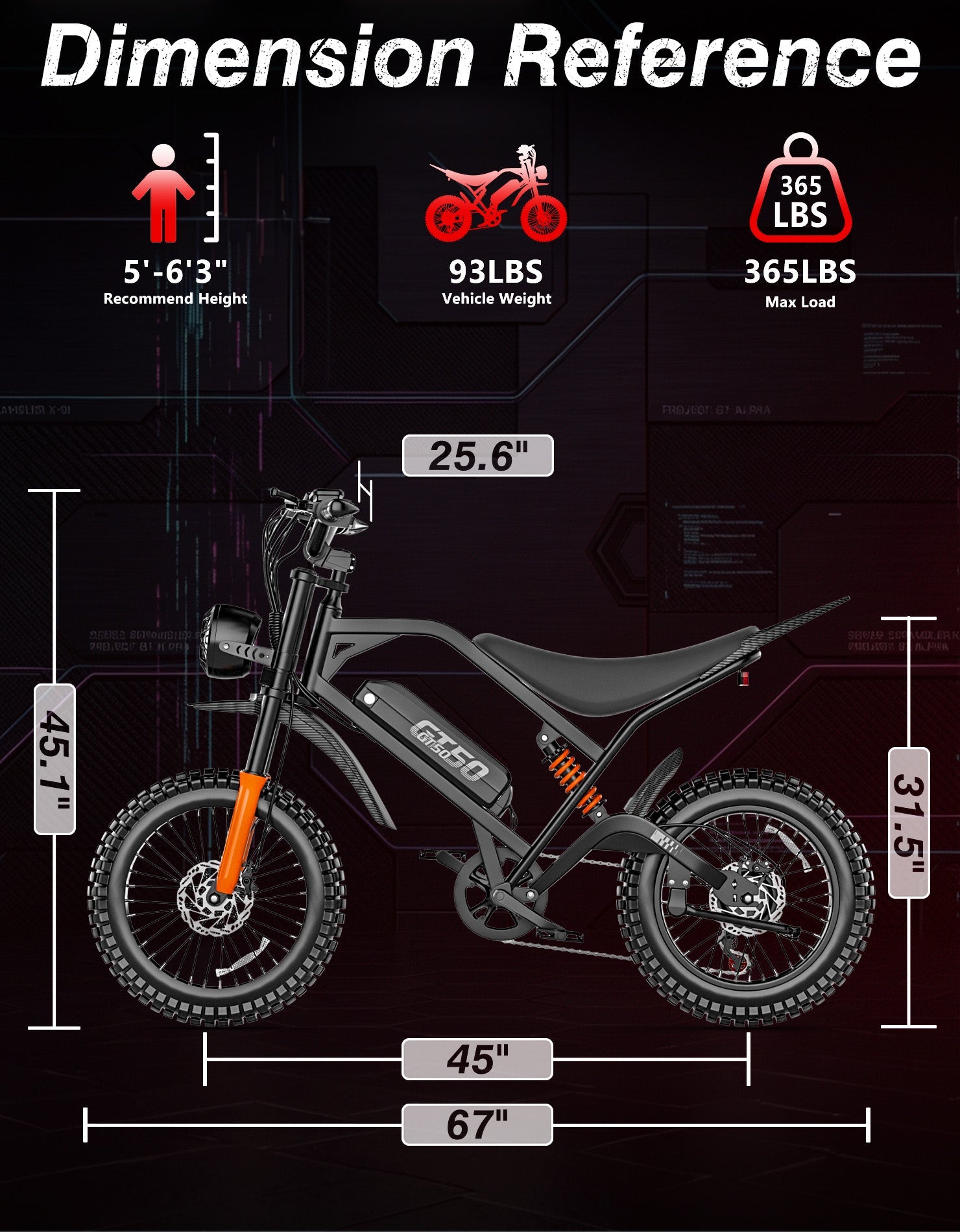
PostJoy currently offers the PostJoy GT50 and PostJoy GT16 Plus in its electric dirt bike collection. Their pages describe full suspension, off-road tires, and hydraulic brake hardware. They also use different tire labels, but tire labeling is not a complete chassis measurement and may not use an equivalent convention. Treat the current listings as discovery sources, not approved fit sheets.
Start With the GT50 Fit Check When
You want to inspect the GT50's page-listed approximate outer tire format and can obtain confirmed seat height, seat width, standover, handlebar and peg dimensions, bike weight, max payload, suspension setup range, brake layout, and intended-rider guidance. Do not infer adult fit from the wheel or tire label.
Start With the GT16 Plus Fit Check When
You want to inspect the GT16 Plus page's smaller listed tire format, removable-battery description, and front-and-rear hydraulic brake listing. Confirm the same full set of dimensions and load information. Smaller tires do not prove the complete bike is smaller, lighter, easier, or suitable for a shorter rider.
Neither model should receive a fit recommendation until its critical dimensions are consistent and the rider passes the powered-off stationary checks below. That is slower than reading a height badge. It is also how you avoid ordering an expensive mismatch with handlebars.
How Rider Weight, Electric Dirt Bike Weight, and Skill Change Fit
Not the same thing: max payload is the load the bike is specified to carry. Bike mass is what you must balance, load, and recover. Motor power is how the drive system delivers force. One number cannot stand in for the other two.
This section stays focused on physical fit and control. Use the complete electric dirt bike buying guide when you are ready to compare motor, battery, range, support, and ownership needs.
Count Rider, Gear, and Cargo Against Verified Payload
Add everything the bike carries:
rider + boots and protection + hydration pack + tools + cargo = geared-up rider weight and operating load
For example, a hypothetical 190 lb rider with 15 lb of protective gear and an 8 lb pack creates a 213 lb operating load. Compare that total with a current, approved max payload. Do not invent a safety margin. Staying below the limit also does not prove the spring setup, braking, comfort, or handling will suit the rider.
Match Bike Mass and Power Delivery to Rider Skill
- New rider: prioritize a manageable electric dirt bike, stable stops, predictable brakes, and calm initial response.
- Intermediate rider: add terrain-specific standing room and suspension setup without sacrificing recoverability.
- Experienced rider: may accept more mass or demanding response for a specific use, but still needs correct fit and verified limits.
Whatever the rider skill level, ask whether you can balance the bike, walk it backward, turn it on a slope, load it, and recover it after a tip-over using safe technique. A physically compact bike can still deliver power that belongs in experienced hands. Our guide to choose your first electric dirt bike covers the broader beginner decision.
Match Electric Dirt Bike Trail Fit to the Terrain
| Terrain | Fit Priority | Why It Matters | Tradeoff |
|---|---|---|---|
| Hardpack and open trails | Stable standing position and room to move | Rider shifts fore and aft at speed and over bumps | More room can come with more bike mass |
| Tight technical trail | Confident footing, compact control zone, safe recovery | Stop-start sections and awkward cambers punish excess reach | Too compact can trap knees and limit movement |
| Loose climbs | Neutral reach and controllable bike balance | You need to weight the bike without hanging from the bars | Easy footing alone does not create traction |
| Descents | Lever reach, centered stance, room behind the seat | Poor reach increases hand fatigue and reduces brake control | A long roomy cockpit may feel awkward at slow stops |
| Mud and sand | Manageable mass and steering effort | Loose terrain makes every correction and recovery harder | Wider tire formats can add drag and effort |
| Short pavement transfer | Comfortable seated controls and legal classification | Road sections expose cramped wrists and unstable steering | A road-comfortable fit may still be poor off-road |
Terrain changes which compromise hurts most. Easier ground reach can matter on a stop-start technical trail. More cockpit room can matter on open rough ground. See our guide to electric dirt bike trail features for the suspension, tire, range, and protection questions beyond fit.
The Electric Dirt Bike Fit Test: Right Size, Too Big, or Too Small?
Wear your normal protective boots and gear. Keep the bike powered off, secured on level ground, and stabilized by another adult where needed. Do not deliberately tip or lift a bike beyond your ability just to complete the checklist. Finish the static check before any permitted, supervised test ride.
Signs the Fit Is Right
- Stable foot contact for your skill and stopping conditions.
- Brake, throttle, and switches are easy to reach.
- Elbows stay relaxed at full steering lock.
- You can stand without being pulled onto the bars.
- Knees clear the handlebar and frame.
- You can balance, walk, and turn the bike without panic.
Those are signs of proper dirt bike fit, not a comfort guarantee. A permitted test ride is still useful because a static bike cannot show throttle response, chassis movement, or fatigue.
Signs the Dirt Bike Is Too Tall
- Stops are unstable for your current skill or terrain.
- You must slide far off the seat to reach the ground.
- A small lean becomes difficult to catch.
- Handlebar reach increases as you struggle for foot contact.
- Walking or reversing the bike feels unsafe.
Some of these can be setup problems. If approved setup changes do not fix them, the chassis is the mismatch.
Signs the Dirt Bike Is Too Small
- Knees stay sharply bent or contact the bars.
- Seat-to-peg room feels cramped.
- You cannot stand in a neutral position.
- The handlebar sits too close or too low for natural control.
- Verified payload or suspension setup does not suit the rider.
Easy flat-footing is pleasant. It is not proof that the bike is correctly sized.
What to Do When You Are Between Dirt Bike Sizes
Choose the More Controllable Electric Dirt Bike Fit When
Lean toward the more controllable option when you are newer, have a shorter inseam, ride stop-start terrain, feel less confident managing bike mass, or load the bike frequently. The smaller-feeling choice still needs enough peg room, handlebar clearance, verified payload, and appropriate power. Fit never overrides manufacturer age guidance, skill requirements, or legal-use restrictions.
If both sizes fit, ask which one you can support after a bad stop, turn around on a narrow slope, and load after a tiring ride. Those are less glamorous questions than top speed. They are also the questions you will actually meet.
Use Dirt Bike Fit Adjustments Only Within Manufacturer Limits
Reasonable adjustments may include approved handlebar position, brake-lever reach, suspension preload or sag, and manufacturer-approved seat or lowering options. Follow the current manual.
Do not cut, weld, improvise lowering links, or reduce suspension travel and ground clearance without qualified review. If the bike needs major surgery before the first ride, it is probably the wrong starting chassis.
Common Electric Dirt Bike Sizing Mistakes
- Choosing by wheel diameter alone. Compare seat, cockpit, wheelbase, mass, and controls as a system.
- Using pants inseam. Measure floor to a level book; jeans sizing is not a body measurement.
- Assuming equal height means equal fit. Inseam, torso, arms, mobility, and experience vary.
- Ignoring bike mass and gear weight. Fit includes stationary handling and loaded suspension.
- Buying high power to grow into. Physical compactness does not make advanced power appropriate.
These electric dirt bike sizing mistakes all come from using one attractive number to answer a multi-part fit question.
Electric Dirt Bike Size FAQs
Should Both Feet Be Flat on an Electric Dirt Bike?
No, not for every rider. Whether you need both feet flat on a dirt bike depends on experience, bike mass, terrain, seat width, and stopping conditions. Newer riders often benefit from more contact. An experienced rider may use a confident one-foot stop, provided the bike remains controlled.
Is Wheel Size the Same as Electric Dirt Bike Size?
No. Electric dirt bike wheel size describes the wheel or tire format, while overall size includes seat height, seat width, wheelbase, frame and cockpit dimensions, peg position, handlebar reach, and bike mass. Two bikes with similar wheel labels can fit and handle very differently.
Can Suspension Sag Make a Tall Bike Fit?
Sometimes it improves foot contact, but rider sag is not a cure for the wrong chassis. Sag must stay within the manufacturer's setup target so the suspension retains balance and usable travel. Do not chase a lower seat height by running an unapproved suspension setup.
What Size Electric Dirt Bike Is Appropriate for a Teen?
Electric dirt bike size for a teen must follow written manufacturer age guidance first, then height, measured inseam, geared-up weight, control reach, skill, adjustable power behavior, supervision, safety gear, and a legal riding location. Do not assume an adult model is suitable because a teen can touch the ground.
Record Your Fit Before You Compare Bikes
Write down rider height, measured inseam, geared-up weight, terrain, foot-contact result, handlebar reach, standing room, and stationary handling result. Then compare PostJoy electric dirt bikes using approved model dimensions instead of a height badge or wheel label.
Share:
Electric Dirt Bike Buying Guide: How to Choose the Right Bike