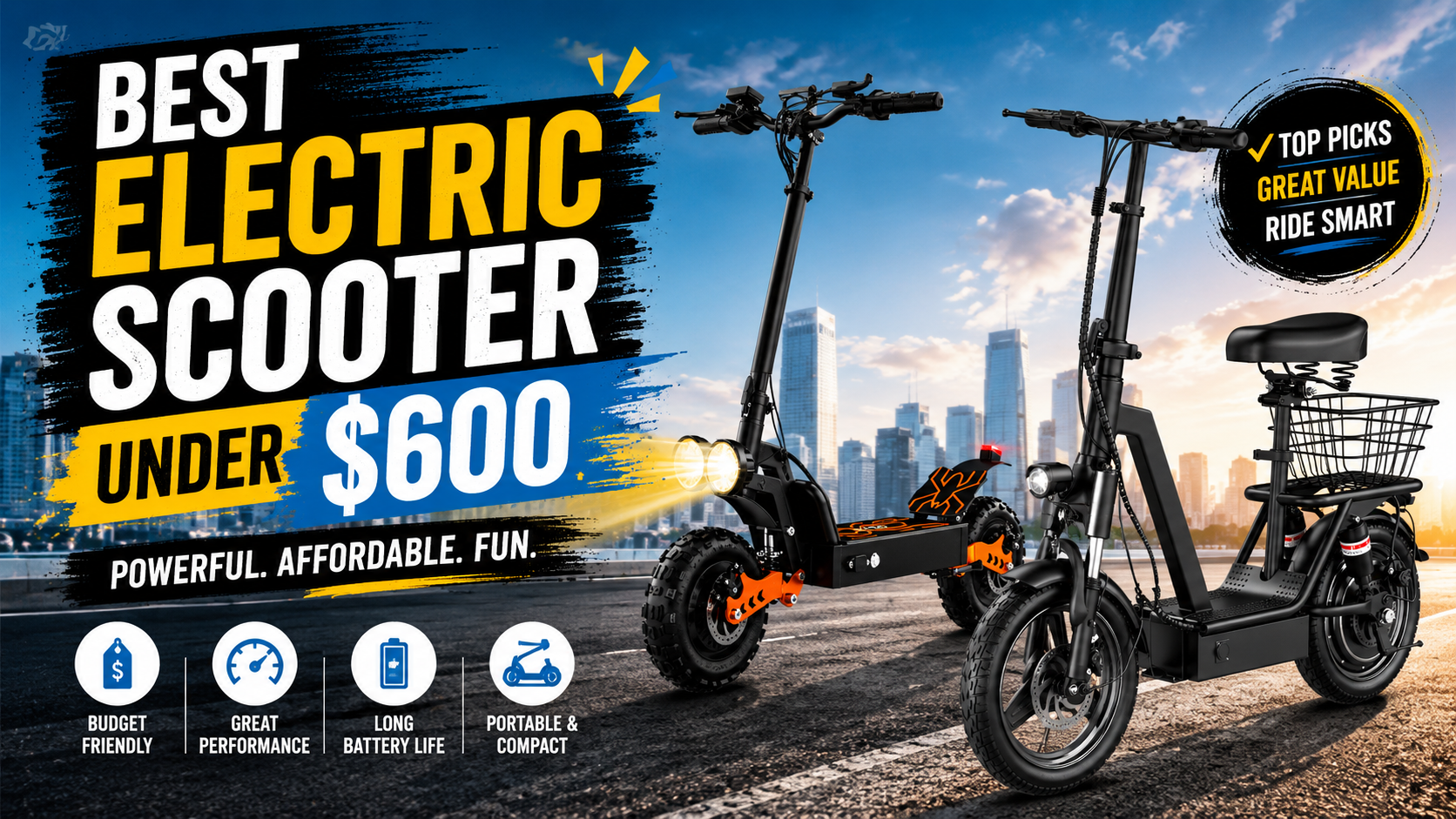
There are far more quality electric scooters under $600 now. Specs have improved, and prices have dropped. However, many scooters that look good online disappoint over time with weak brakes, small batteries, and poorly built frames.
This guide covers what to look for in a budget electric scooter, what the under-$600 category can realistically deliver, and which PostJoy models you should consider.
What to Expect From an Electric Scooter Under $600
The first thing to understand is what you get for this amount of money. Many electric scooters under $600 offer speeds around 15 to 25 mph, while some performance-focused models can go higher. You also get a real-world range of 15 to 40 miles, depending on battery size, and enough motor power for flat to moderately hilly urban roads.
When you buy an electric scooter, you need to look at the specs, but there are a few other things to keep in mind. Before comparing prices, use the electric scooter buying guide to decide which specifications actually matter for your route. Battery quality, frame strength, braking performance, folding mechanism design, and overall ride feel all affect how enjoyable and reliable it is.
Often, you will see a manufacturer claim that a scooter with a small battery can achieve 40 miles of range, but that measurement is made under ideal conditions. The manufacturer will test the range with a light rider on flat terrain at low speed. In the real world, where you have hills, uneven roads, and maybe a backpack, it's best to expect about 60-70% of the claimed figure. With this in mind, a scooter claiming 35 miles will realistically get you 20 to 25 miles. That's still more than enough for most typical commutes, but it's worth knowing before you buy.
What Features Actually Matter?
The power of an electric scooter's motor matters more than most buyers realize, but not for the reason you might think. A higher-powered motor isn't just about reaching a high top speed. It also affects how well the scooter climbs hills, handles headwinds, and carries extra weight. A scooter with a weak motor that struggles on inclines or slows dramatically under load is frustrating to ride, regardless of its claimed top speed on flat ground.
Battery capacity, measured in watt-hours, is the most reliable way to work out a scooter's range. Our battery guide for electric scooters explains why watt-hours are more useful than voltage or amp-hours alone. Multiply the voltage by the amp-hours, and you get the watt-hour figure. A 48V 13Ah battery is 624Wh. A higher number indicates a longer range, though it also usually means the scooter is heavier due to the larger battery. For a daily commute of 10 to 20 miles round-trip, anything above 500Wh gives you enough range.
Tires make a bigger difference to ride quality, too. Pneumatic tires absorb road imperfections that solid tires pass straight through to your hands and feet. On a standing scooter, you feel every bump through your legs. Wider pneumatic tires reduce that significantly, while also giving you more grip.
A good set of brakes is critical at higher speeds. Mechanical disc brakes are reliable and adequate for most urban riding. But, hydraulic disc brakes give you more stopping power with less hand effort and perform better in the wet. Budget should not mean weak stopping performance; compare acceptable systems in the electric scooter brakes guide. At 25 mph or above, the type of brake you have matters considerably more than it does at 15 mph.
Suspension helps on rough roads but adds weight and makes the scooter a little more complex. You'll notice that front suspension is the most common and makes a noticeable difference on uneven surfaces. Full suspension is less common at this price point, but it's worth looking for if your commute includes rough or potholed roads.
Who Should Buy an Electric Scooter Under $600
Electric scooters under $600 are ideal for riders who want practical transportation without paying premium prices. This category works especially well for commuters, students, and people who mainly use their scooter for short everyday trips. You can still get strong performance, good range, and useful features without moving into the expensive high-performance scooter market.
However, you need to manage your expectations. A budget-friendly scooter should be judged on reliability and everyday usability rather than high-end specifications.
For most riders, a scooter that starts every morning, feels comfortable, brakes well, and covers their normal travel distance is more valuable than one focused only on maximum speed.
PostJoy Electric Scooters Under $600
PostJoy's electric scooter range includes two models under $600 that suit very different people.
PostJoy K10: A Comfortable Seated Option Under $600
 At $399.99, the PostJoy K10 is the more affordable of the two and the only electric scooter with a seat in the range. It has a 1000W peak motor and a 48V 13Ah battery, giving you up to 25 mph and up to 35 miles of claimed range. In real-world use, expect around 20-25 miles, which is more than enough for a typical city commute.
The included seat is the distinctive feature. Most scooters under $600 are standing-only, and the K10's adjustable, padded seat makes it considerably more comfortable for longer rides or daily commuting. For more detail on comfort, stability, and seated use, see the guide to choosing an electric scooter with a seat. The 14x2.2-inch pneumatic tires and dual suspension give a more comfortable ride than many competing standing scooters at higher prices.
The foldable frame makes storage easy. It fits in a car trunk, under a desk, or in a small apartment without taking up much space. The removable battery lets you charge it separately, so you don't need to bring the whole scooter inside. It also has a rear basket, which is a practical touch that most scooters in this price range lack. At $399.99, the K10 is one of the most practical and complete electric scooters available under $600.
A Performance-Focused Option Under $600
 The PostJoy GT28 starts at $599.99 and is significantly more capable. The 3000W peak dual-motor system with 75Nm of torque puts it in a different performance category from virtually anything else at this price point. A dual motor under $600 is unusual. Most scooters at this price use a single motor rated at 500W to 1000W. The GT28's combined output gives you considerably more hill-climbing ability and improved power delivery for different riding conditions.
This scooter has a 48V 20Ah battery that provides a claimed range of 40-70 miles in ideal conditions. Real-world range will usually be lower depending on rider weight, speed, terrain, and conditions, but the larger battery gives riders more flexibility between charges. For commuters covering 15 to 20 miles round-trip, that's two full days of commuting on a single charge.
The 11x2.5-inch fat tires give it more grip and traction than standard pneumatic tires, particularly on wet roads, gravel, and uneven surfaces. Front and rear suspension, dual-disc brakes, and NFC unlocking round out a great specification for riders looking for more performance.
At 35 mph, it's fast for a scooter in this price range, and the dual disc brakes provide the extra stopping performance expected from a higher-powered scooter. The folding design keeps it practical for storage and transport despite the performance specs.
How to Choose Between the K10 and GT28
The two scooters are built for different riders.
If you are someone who wants comfort and practicality, the K10 would suit your needs. It is the better choice for shorter commutes, riders who want to sit, older riders, or anyone who wants a straightforward, comfortable daily ride.
The GT28 suits riders who want the most capability for the money. This is a great option if you're covering longer distances, riding in mixed conditions, riding in a hilly area regularly, or simply want a scooter that performs well above its price. The dual-motor system and fat tires give more capability on varied surfaces compared with many standard commuter scooters.
Budget is also a factor. If $399.99 covers your needs, the K10 is a complete, practical scooter at that price. If you can stretch to $599.99, the GT28's dual-motor performance is a major step up, which is hard to find at this price. The full K10 vs GT28 comparison breaks down range, speed, hills, comfort, storage, and braking side by side.
 What to Watch Out For When Buying a Budget Scooter
The under-$600 market includes a lot of scooters that don't hold up well. There are a few things worth checking before you buy any scooter at this price point.
Look for UL 2272 certification. This is a US safety standard for electrical systems on personal mobility devices. Certification can provide extra confidence that the electrical system has been tested to recognized safety standards. Most reputable brands at this price will have it, and it's worth walking away from any that don't.
It's a good idea to look at the battery cell quality before you buy an electric scooter. Many budget scooters claim impressive range figures, but they rely on small, low-quality batteries that degrade quickly. A battery that loses noticeable capacity sooner than expected in the first few months is effectively a range reduction you could do without. Better cell quality means the battery holds its capacity for longer, and the scooter stays useful for a few years instead of becoming unreliable by winter.
Folding mechanisms are one of the most common things to fail on budget scooters. A weak mechanism turns a practical commuter into a safety issue after a few weeks. Look for reviews that specifically describe how the folding mechanism holds up after extended use.
You should also pay attention to the weight of an electric scooter, as it makes more of a difference than many first-time buyers realize. A heavy electric scooter is more difficult to carry up stairs or onto public transport, making it less portable. The K10 and GT28 are both foldable, but they're not ultralight, so factor this in if you need to carry your scooter regularly.
Customer support and warranty coverage are also worth checking before you buy. A company that's easy to contact and backs its products with a good warranty is worth paying a little more for.
Final Thoughts
The under-$600 electric scooter market is better than it's ever been, but the quality gap between good options and bad ones is still enough to make it possible to buy a bad one by accident. The right scooter at this price is one that suits your commute and riding style, has solid brakes and a reliable battery, and lasts a long time. Buying from a brand with proper customer support and a clear warranty policy is worth as much as any specification sheet.
The PostJoy K10 at $399.99 is the most practical seated scooter available for under $600, with specs that comfortably cover daily commuting. The PostJoy GT28 at $599.99 is a well-performing scooter in this price range, with a dual-motor system and fat tires that set it apart from the rest of the category.
Browse the full PostJoy electric scooter range to find the right model for your commute and budget. PostJoy also offers electric bikes and moped style ebikes if you want a pedal-assisted option instead.
FAQ
What is the best electric scooter under $600? It depends on what you need. The PostJoy GT28 at $599.99 is designed for riders who prioritize performance at this price, with a 3000W dual-motor system and a range of 40 to 70 miles. The PostJoy K10 at $399.99 is the better option for riders who want a comfortable seated scooter for daily commuting.
How far can an electric scooter under $600 go? Real-world range differs considerably. Most scooters at this price will get you 15 to 40 miles, depending on battery size, rider weight, and terrain. Budget for around 60-70% of the claimed range in typical use.
Do you need a license for an electric scooter under $600? Rules vary depending on location. Many areas do not require a license for standard electric scooters, but requirements may vary by speed, motor power, and local regulations.
Is a dual-motor scooter worth it for under $600? If you can find one at this price, yes. The PostJoy GT28 is one of the very few dual-motor electric scooters available under $600. The dual motor gives you considerably more hill-climbing ability and traction than a comparable single-motor scooter.
Are electric scooters under $600 good for commuting? Yes, for most urban commutes. A scooter with a 500Wh or larger battery comfortably covers a 10- to 20-mile round trip. Look for pneumatic tires, a reliable braking system, and a motor that handles your local terrain without struggling.
Share:
Best Electric Scooter With Seat: A Complete Guide to Comfortable Riding
Electric Scooter Buying Guide: How to Choose the Right e-Scooter